Have you ever wondered whether there’s a real difference between a river and a stream? While fishing one day, I found myself asking exactly that question. My initial thought was that a river is just a bigger stream. That’s partly true—but it’s a little more complicated than that.
In the strictest sense, stream is a general term for any flowing body of water, while a river is simply a large stream. In other words, all rivers are streams, but not all streams are rivers. The point at which a stream becomes a river isn’t fixed—it’s somewhat subjective and often depends on regional usage.
A useful analogy is roads: a stream is like any road, from a small street to a highway, whereas a river is more like a major highway. An even better analogy, though, is a tree. Small headwater streams are like the tiniest twigs; as they join together, they form larger branches, and eventually a main trunk. In this sense, a river is the trunk of the tree, fed by an entire network of smaller branches upstream.
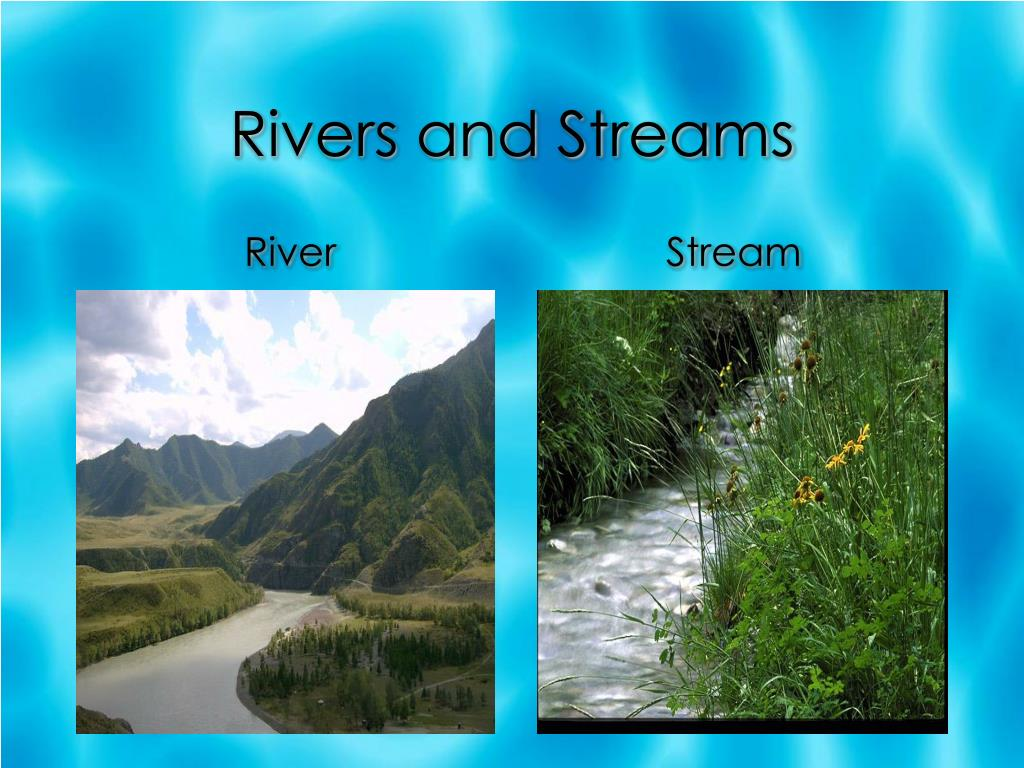
Hydrologists take a more systematic approach using the Strahler stream order system. In this system:
- 1st-order streams are the smallest channels with no tributaries and are often headwaters.
- 2nd-order streams form when two 1st-order streams meet.
- 3rd-order streams form when two 2nd-order streams meet, and so on.
Using this classification:
- Low-order streams (1–3) are what most people think of as streams, creeks, or brooks.
- Mid-order streams (4–6) are transitional and are often locally called rivers.
- High-order streams (7+), such as the Mississippi River (around 10th order), are large rivers.
So, who cares?
For anglers, this actually matters. Stream order correlates strongly with habitat type, water conditions, and fish communities. In many cases, the size and order of a stream are good predictors of the kinds of fish you’ll find there:
- 1st–2nd order streams (tiny headwaters):
Cold, shallow, and shaded; typically home to small trout and minnows. - 3rd–5th order streams (small rivers/creeks):
More stable flow with moderate depth; commonly hold trout, smallmouth bass, and panfish. - 6th-order and higher (large rivers):
Deeper, slower, and warmer waters; support species like walleye, catfish, pike, and largemouth bass.
As stream order increases, you generally move from small, cold-water species to larger, warm-water fish.
 OneHundredFish