This afternoon I went to Rushford to try to catch Redhorse species and White Sucker at the Root River canoe drop-off on the south side of town. I used a simple bottom rig: 6 lb monofilament, 1/8‑oz sinker, 6 mm bead, size 10 barrel swivel, and about 18 inches of 6 lb leader with a size 8 hook, baited with roughly a 1/2‑inch piece of earthworm. No bites. I gave up after about 45 minutes.
I then drove to Preston to try for Brown Trout on the South Branch of the Root River. Because I was feeling a bit lazy I decided to stick with the same bottom rig for a while before switching to an inline spinner. I was surprised when I quickly caught a decent-sized, beautifully colored Rainbow Trout on the bottom rig. It put up a respectable fight.
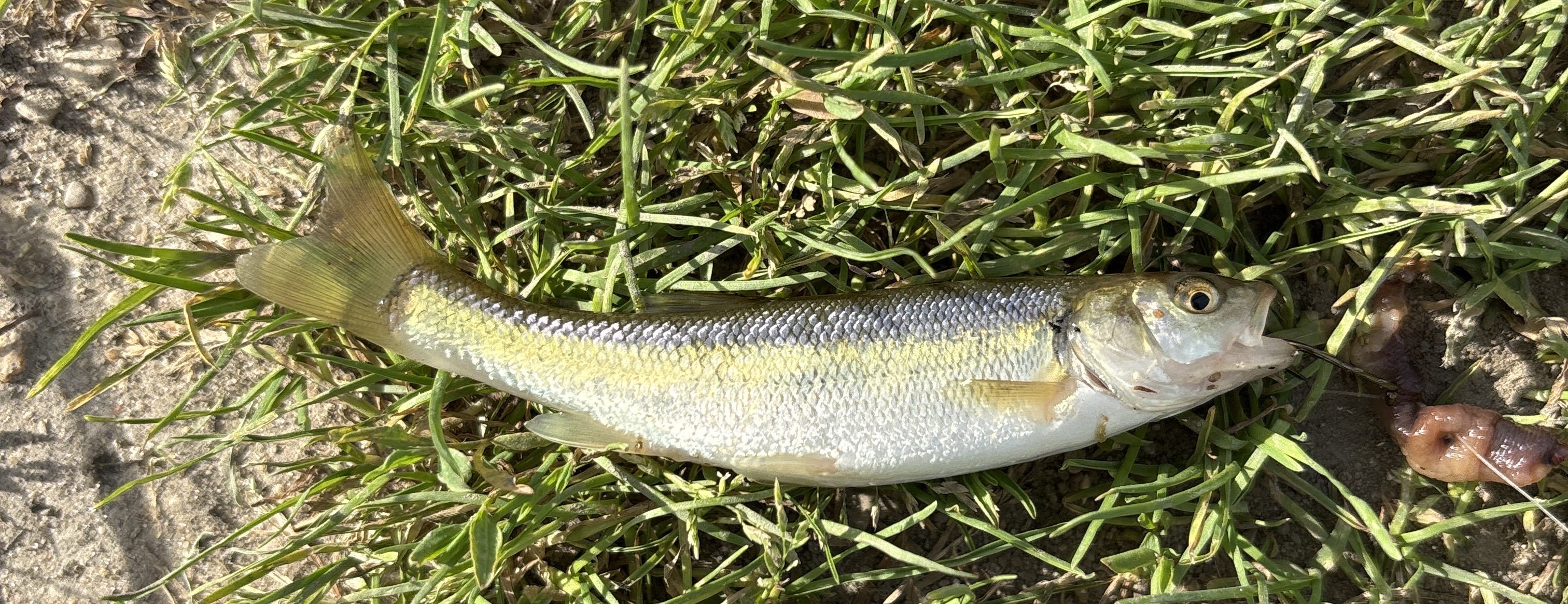
A little later I reeled in a ~3-inch River Chub (Nocomis micropogon)—a new species for me—which gave no fight (not surprising given its size). I didn’t even realize it was on the line until I pulled it in.
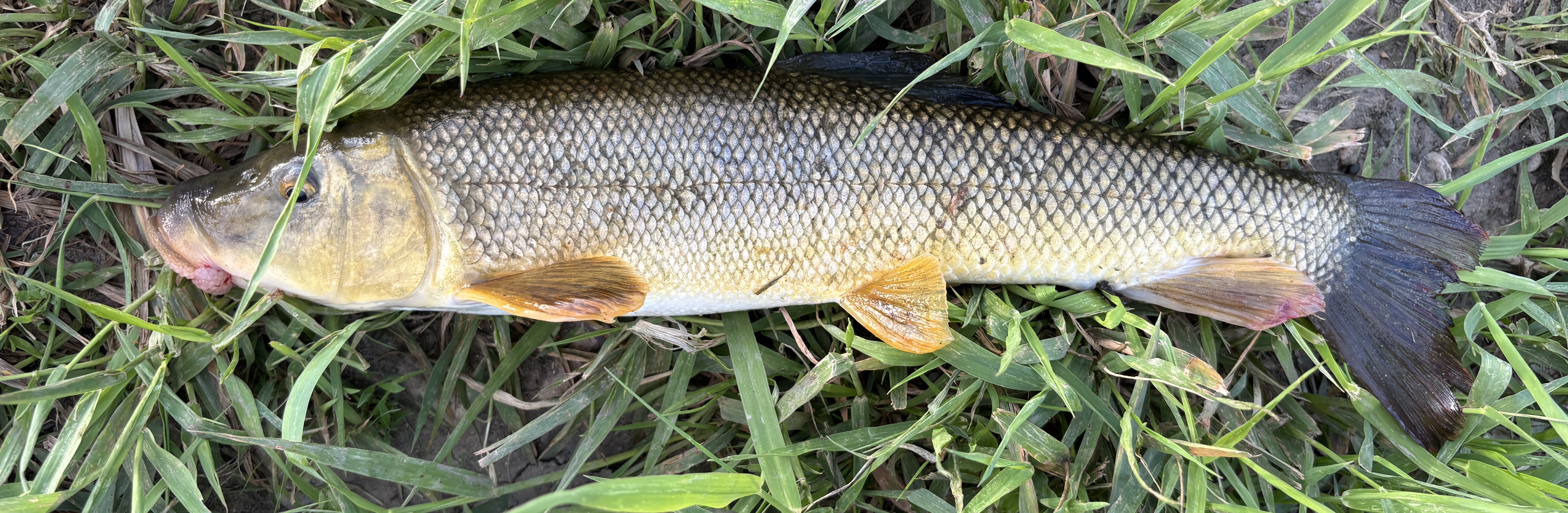
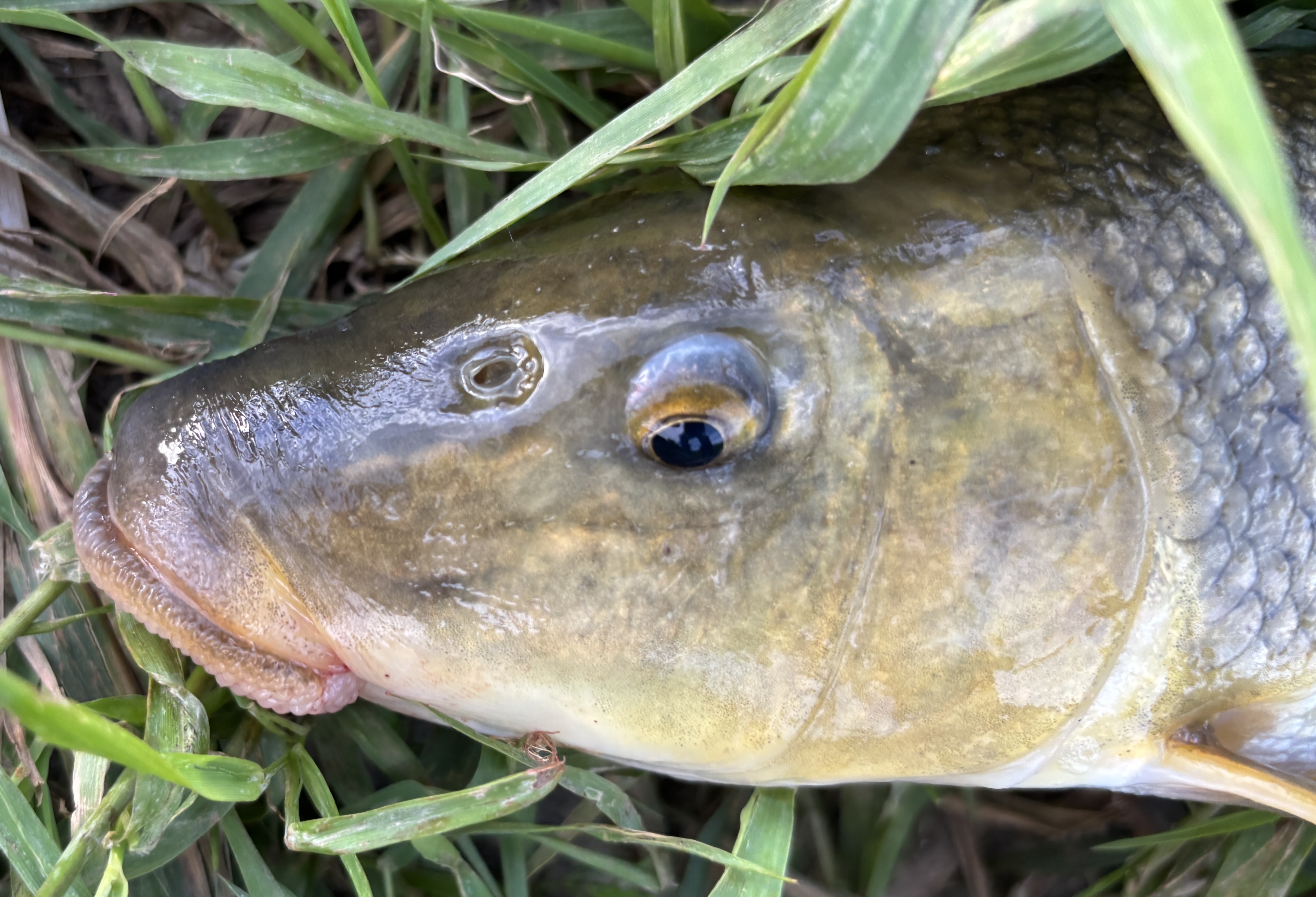
About 20 minutes later I caught a solid (~12-inch) White Sucker (Catostomus commersonii), also a new species. Interestingly, it put up very little fight given its size. The White Sucker’s lips look like those of someone who’s had a bit too much Botox.
I never did get around to using the inline spinner before I had to quit for the day. Perhaps I would have picked up a Brown Trout if I had.
So far, in terms of fight relative to size, I would rank Bluegill, Smallmouth Bass, and Trout as the best fighters. Channel Catfish also fight well, but they’ve been larger fish, so that’s somewhat expected. The least impressive fighters for their size have been White Sucker, Bullheads, and Northern Hog Sucker.
A little reading suggests that bottom-feeding fish often don’t “fight” as dramatically on hook and line because they’re built for steady, near-bottom living rather than quick bursts of speed. Their bodies and behavior favor slow cruising and endurance, so instead of explosive runs or jumps, they tend to pull steadily and hug the bottom—resulting in a more stubborn but less flashy fight compared with fast-moving predator species.
River Chub are apparently among the most common fishes in North American streams and are important prey for larger fish. They are often used as bait by anglers targeting bass and catfish. Their presence is also considered a good indicator of water quality, as they are relatively intolerant of pollution, turbidity, and siltation, and typically require a pH of at least ~6.0.
White Suckers are bottom feeders that use their fleshy lips to vacuum up sediments and the organisms within them. They are opportunistic feeders, consuming small invertebrates, algae, and plant material. In turn, they are prey for a wide range of larger fish including Walleye, Trout, Bass, Pike, and Muskie.
 OneHundredFish