The day before, I spent quite a bit of time researching how to fish for salmon and other Puget Sound species such as greenling, rockfish, and flounder. I have learned that patience with the research phase usually pays off. It may take several hours to sort through information on rods, reels, line, lures, bait, rigs, tides, locations, and times of day, but it almost always increases my chances of success.
To get properly equipped, I visited Outdoor Emporium, a large tackle store in downtown Seattle. The salesperson was extremely helpful. He recommended a rod in the 9 to 10 foot range spooled with 20-30 lb braided line. I ended up buying an Okuma SST 9’9″ rod and a reasonably priced Penn Pursuit spinning reel. He spooled it with 20 lb orange braid and added a clear monofilament leader. He explained that when I eventually lost the leader, I would need to tie on a new one using a double uni knot or a swivel. I also picked up several salmon lures, including a handful of Buzz Bombs.
By then it was already 4 p.m., and I needed to get back to North Bend for dinner with my daughter and her family. Before returning, however, I drove to Edmonds to scout the fishing pier. I wanted to know exactly where to park and how everything was laid out before arriving the next morning. Parking turned out to be easy, and I spent about fifteen minutes watching anglers from the pier. Nobody landed a salmon while I was there, but I felt well prepared for the next day’s adventure.
The next morning I was up by 6 a.m. After gathering my gear and getting organized, I arrived at the Edmonds Fishing Pier around 8:30.
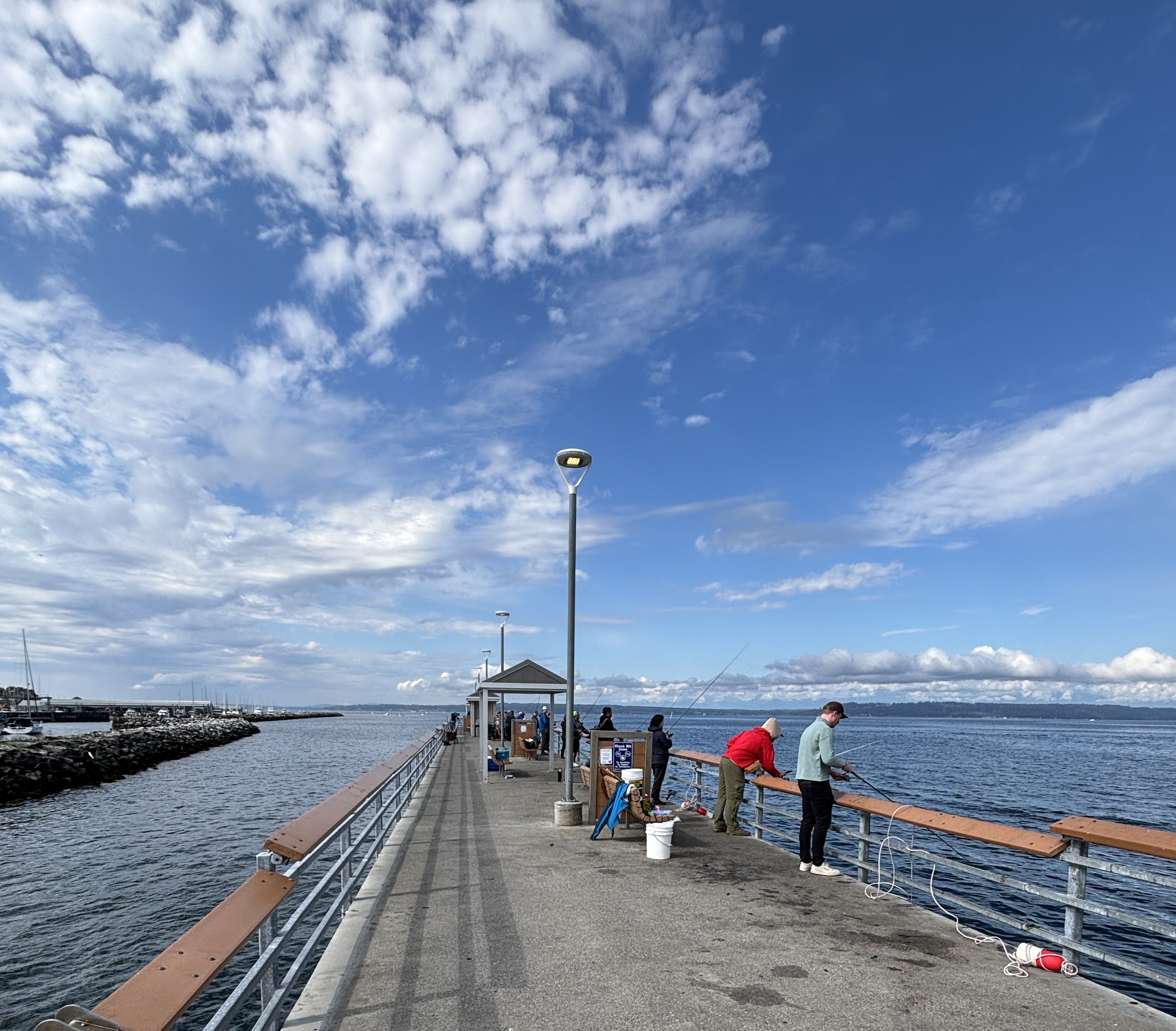
As I walked halfway down the pier, I found a fisherman excitedly trying to land a salmon. He kept asking if anyone had a net. Fortunately, I had purchased a pier net on Amazon, although it still needed to be assembled. Another fisherman helped me put it together quickly, and soon the struggling angler was scooping his salmon into my net. He thanked me, and I found a spot nearby to begin fishing.
I tied on a yellow-and-orange Buzz Bomb and started casting. The long rod launched the lure much farther than anything I was accustomed to using in Minnesota. I cast westward and retrieved it the same way everyone else seemed to be fishing it: let it sink for a few seconds, then sharply jerk it upward.
About thirty minutes later, I noticed schools of small fish breaking the surface in the distance. That seemed like a promising sign. The day before I had studied the tide tables and learned that low tide occurred early in the morning, with high tide and slack water arriving around 1 p.m. Baitfish often move in during the hours leading up to high tide, followed by salmon. For that reason, I had intentionally planned to fish from late morning into early afternoon.
Soon the baitfish were moving directly beneath the pier.
Then it happened.
I cast into the activity, began my retrieve, and suddenly felt a solid strike. The fish was not huge, but it fought well. A few minutes later I had it at the edge of the pier. The same fisherman who had borrowed my net helped me land it, and together we hauled it up onto the pier.
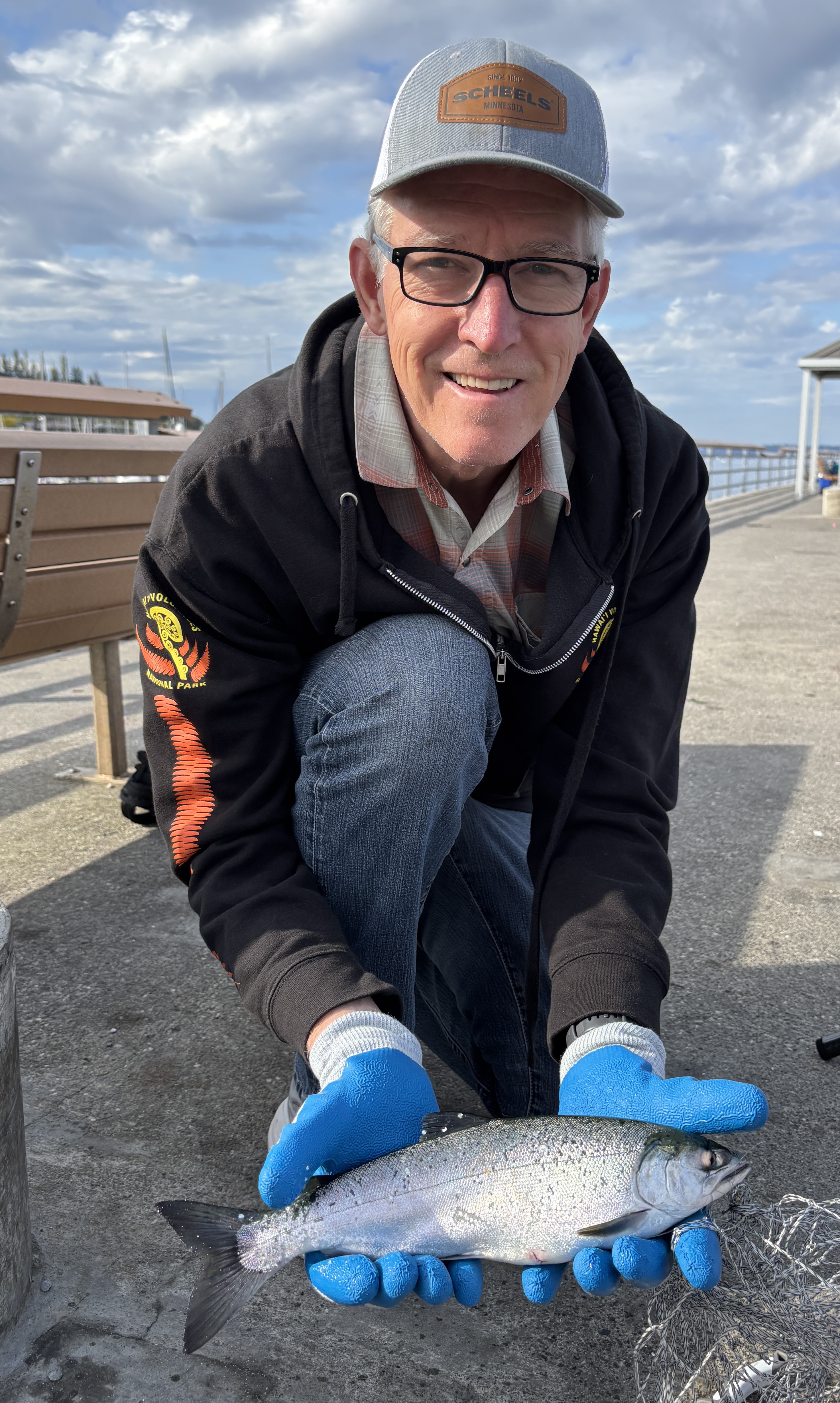
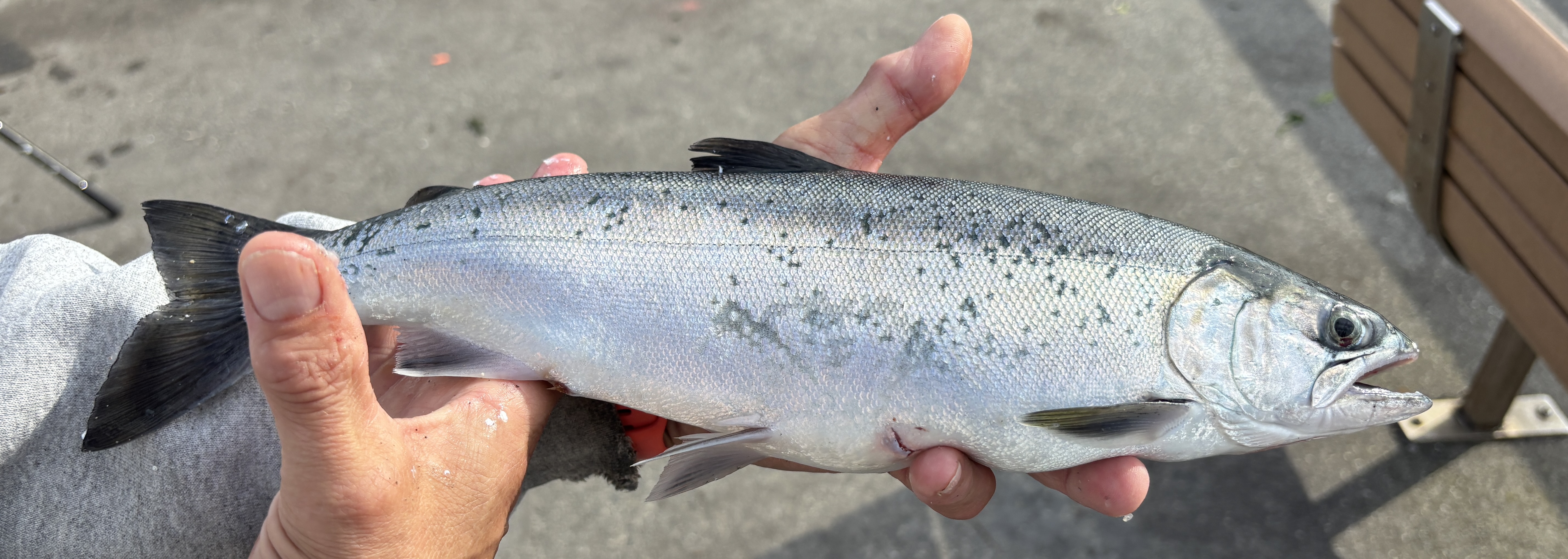
While we were unhooking the fish, he examined it carefully.
“Look at the tail,” he said. “I think it’s a sockeye.”
He pointed out several features that convinced him it was a sockeye salmon. Later, however, when I posted photographs to iNaturalist, the identification came back as Coho Salmon. Several experienced observers subsequently agreed with that assessment. In the end, it appeared to be a juvenile coho measuring about 14.5 inches.
Because I did not have a cooler and was not planning to keep fish that day, I offered it to the gentleman who had helped me with the net. He happily accepted.
After another hour of casting, I failed to hook a second salmon. Even so, I felt fortunate. There were easily forty or more anglers lined along the pier, and only a handful of salmon were caught in my vicinity during the morning.
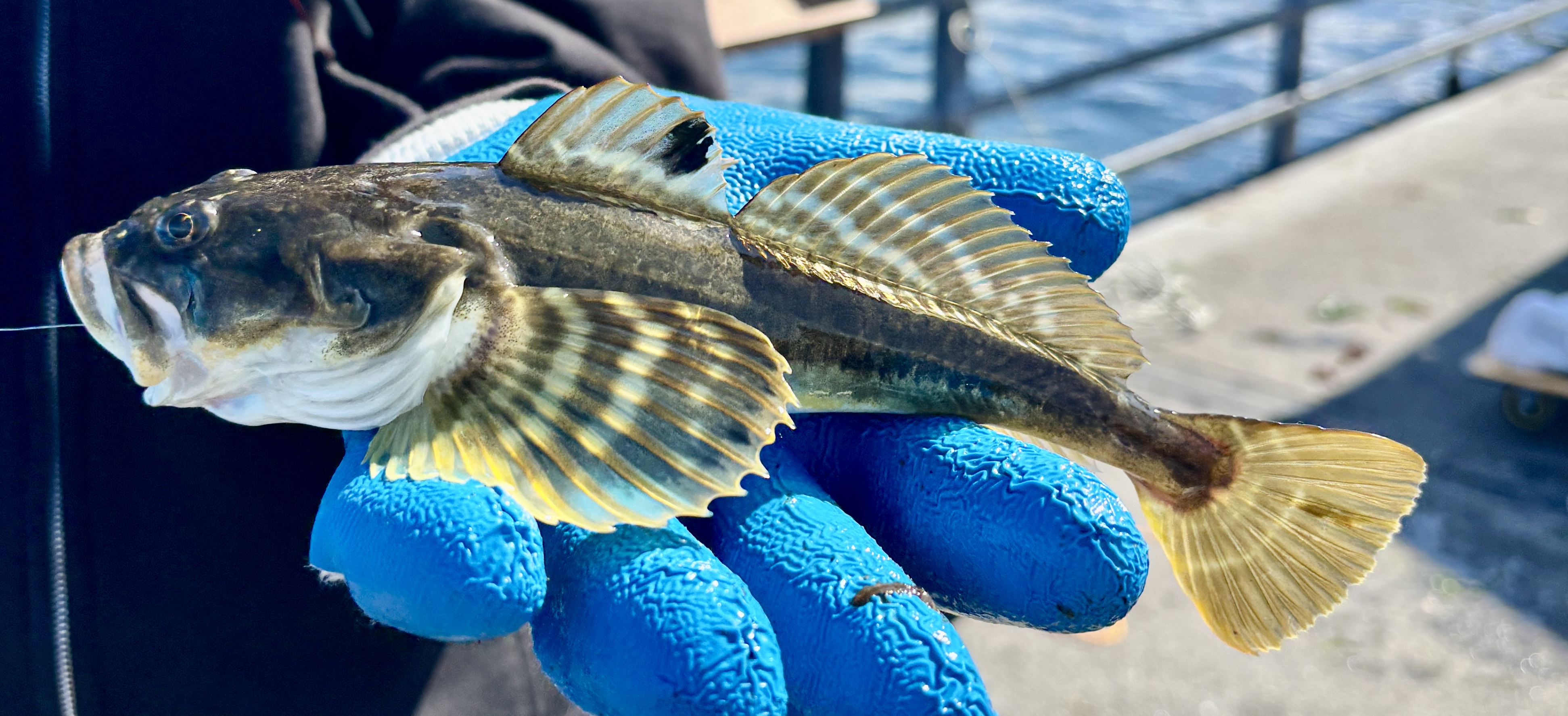
Eventually I decided to try for other species. I moved to the north end of the pier where many people were crabbing. After switching to a Carolina rig baited with Gulp products, I began picking up strikes from bottom-dwelling fish. The 6-inch camo-colored sandworm proved particularly effective.
Before long I landed two Pacific Staghorn Sculpin along with several small flatfish. The flatfish proved more difficult to identify. iNaturalist initially suggested Pacific Sanddab, later changed its opinion to Speckled Sanddab, and no human observers have yet weighed in. For now, the safest identification is simply a member of the flounder family.
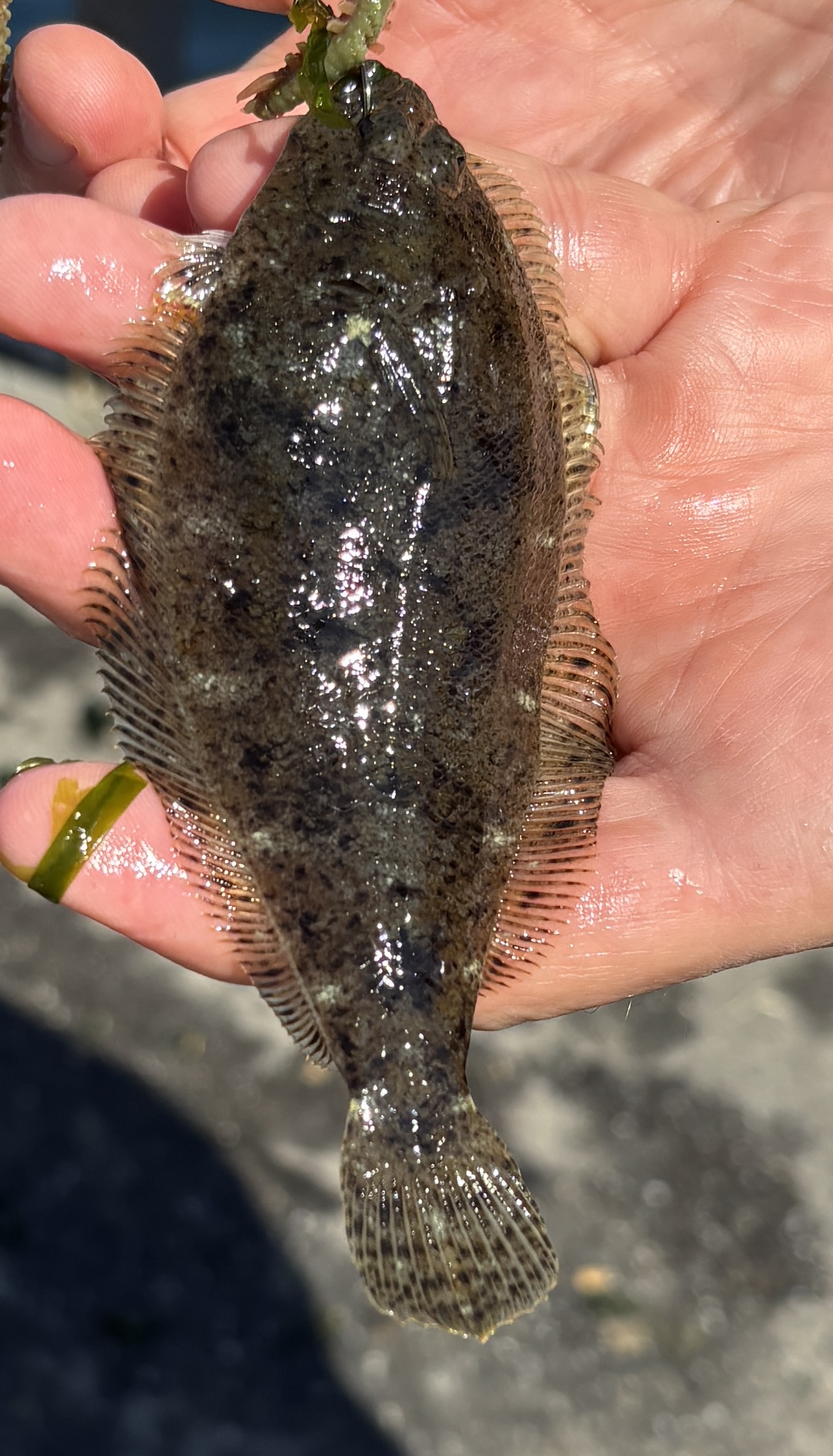
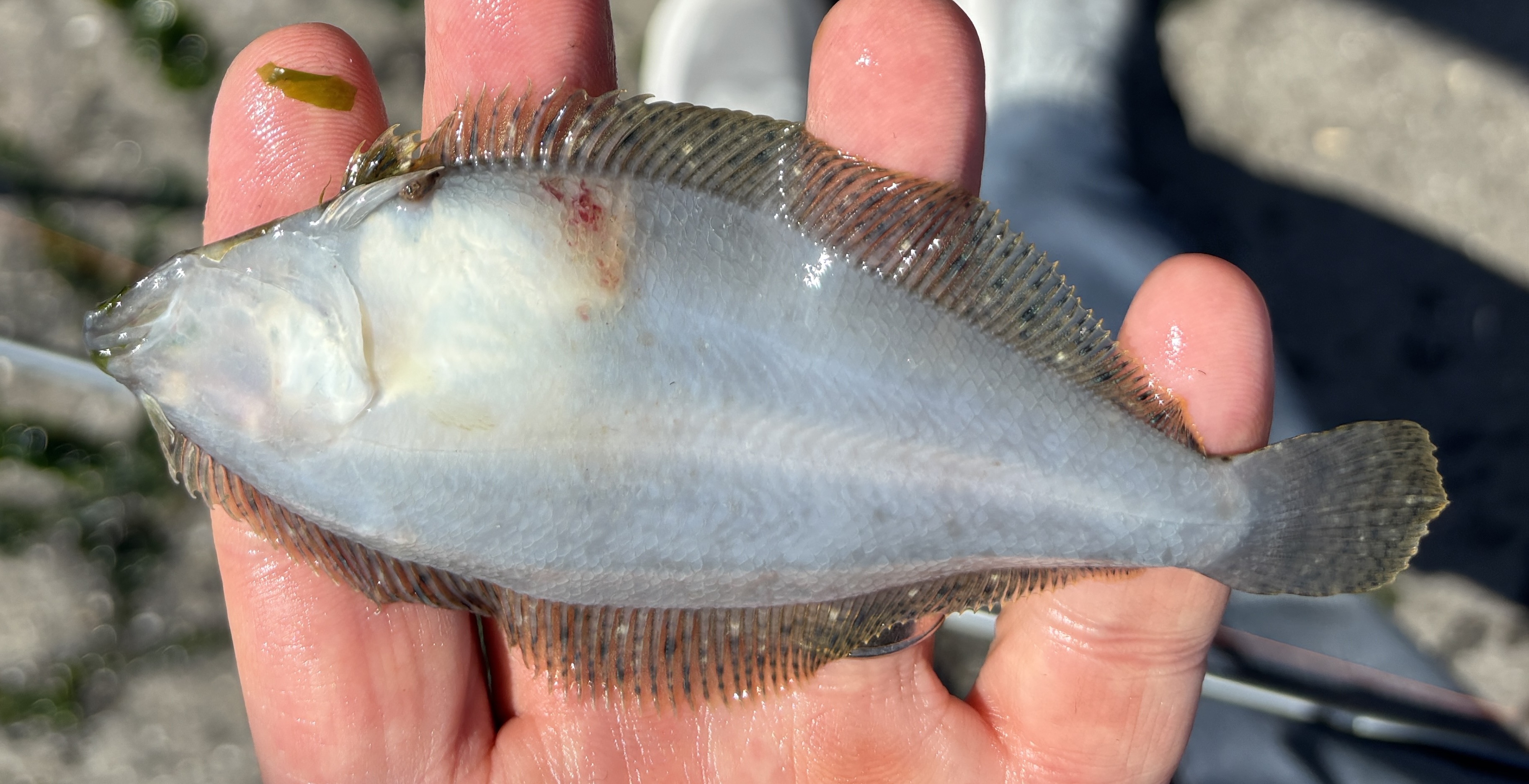
One of the most enjoyable parts of the day had nothing to do with fish.
A friendly woman and her three daughters struck up a conversation with me. They asked what I was fishing for, and I admitted that as a Minnesotan I was still trying to learn the basics of fishing in salt water. Originally from New Mexico, she said she was still learning as well. Their focus that day was crabbing, and they appeared to be doing quite well, with a pile of Dungeness and Red Rock crabs already in their buckets.
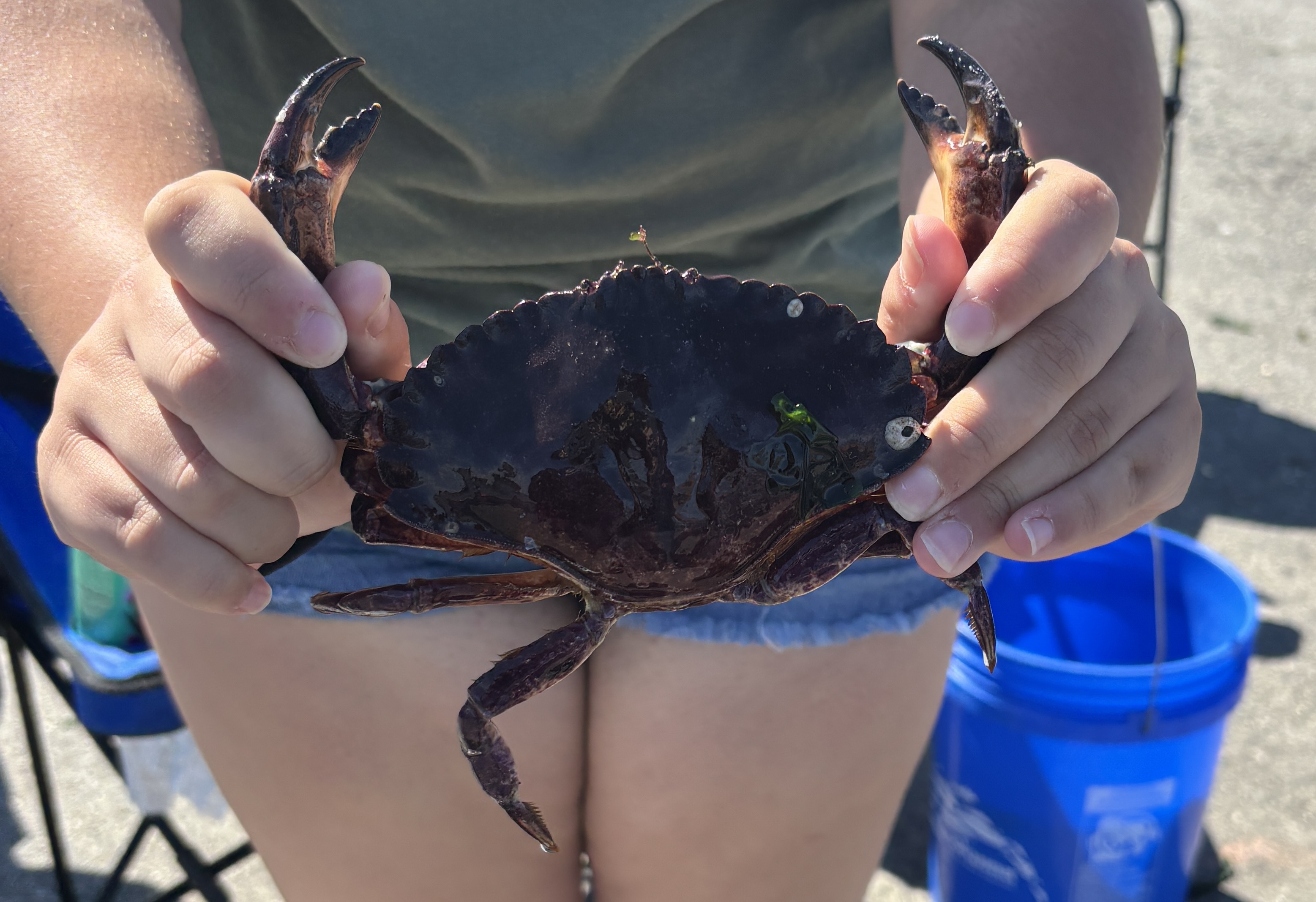
The girls were fascinated by the fish I was catching, especially the sculpin. They wanted to see them up close and even touch them. I happily obliged. Encounters like that reminded me how friendly and welcoming the people on the pier were throughout the day.
In the end, it was a delightful day of fishing. I added two new species to my life list, Coho Salmon and Pacific Staghorn Sculpin, along with a still-unidentified flounder. More importantly, I learned a great deal about fishing Puget Sound piers. It is a completely different experience from fishing in Minnesota, but one that I thoroughly enjoyed.
I am heading back to Minnesota now, but I am already looking forward to returning later this fall to fish the Edmonds pier and perhaps a few others around Seattle.
 OneHundredFish