I have been wanting to learn more about minnow-sized fish ever since I started my goal of catching 100 fish species this year.
I should clarify that when I say “minnow-sized,” I am referring to small fish, typically 2-4 inches long, and not necessarily members of the Minnow family. Most species in the minnow family are indeed small, but there are notable exceptions, such as the Common Carp, which can grow to enormous sizes. I do not plan to count minnow-sized fish on my 100-species list, but I am nonetheless very interested in learning more about them.
My son-in-law, daughter, and my grandchildren joined me for an outing to the Zumbro River just south of Apache Mall in Rochester, Minnesota. My daughter, who has become an excellent watercolor painter, took a well-deserved break and spent her time under a shady tree painting a beautiful hummingbird. Meanwhile, the rest of us went hunting for minnows.
At first, my son-in-law and I tried using a seine net in the moderately fast-flowing current of the river. We caught exactly zero minnows with that method and eventually gave up. We then noticed that there were large numbers of minnows in the shallow, slow-moving rivulets along the edge of the river.
Fortunately, I had also brought a dip net. My son-in-law, who is quite a bit faster than I am, quickly began catching minnows and placing them in a bucket. We photographed each fish and then asked iNaturalist to help identify it.
Among the approximately 50 minnow-sized fish we caught were seven different species:
- Johnny Darter (Etheostoma nigrum)
- Bigmouth Shiner (Ericymba dorsalis)
- Rainbow Darter (Etheostoma caeruleum)
- Central Stoneroller (Campostoma anomalum)
- Creek Chub (Semotilus atromaculatus)
- Northern Hogsucker (Hypentelium nigricans)
- White Sucker (Catostomus commersonii)
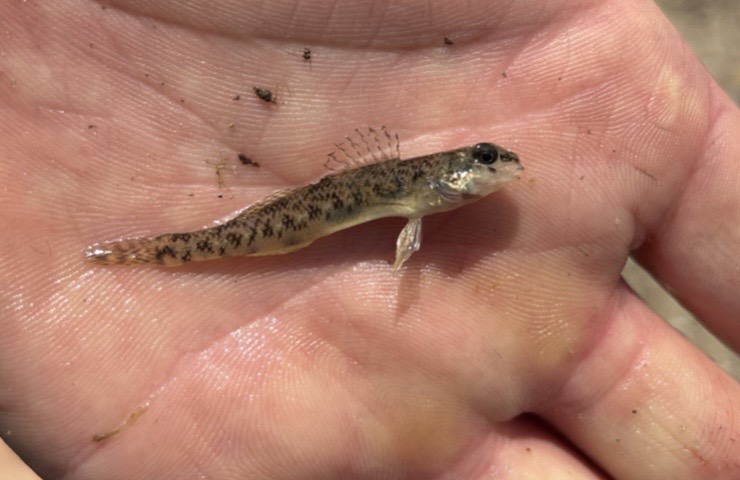
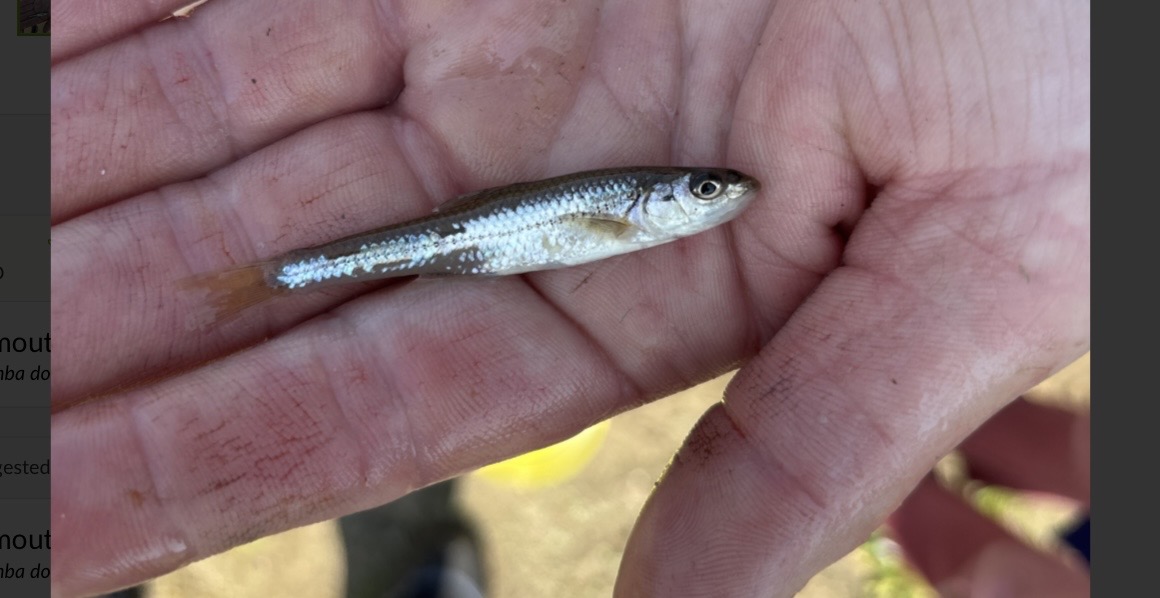
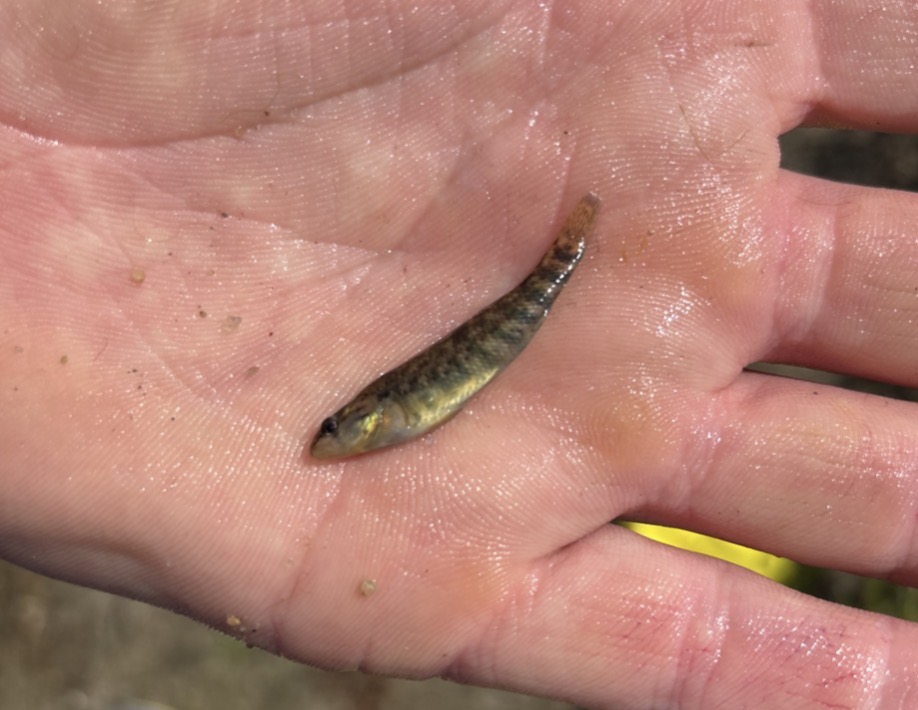
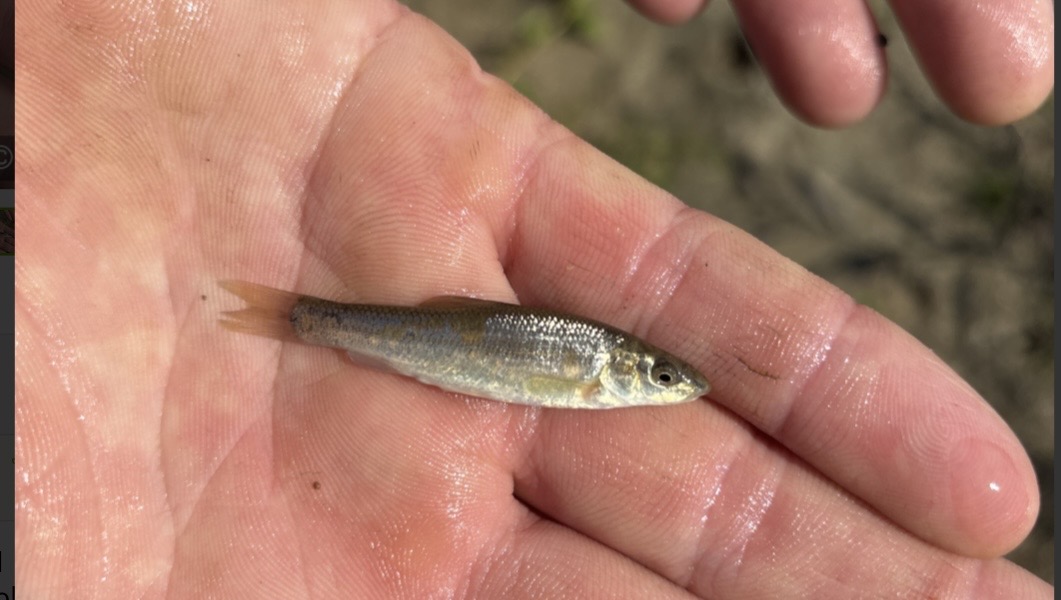
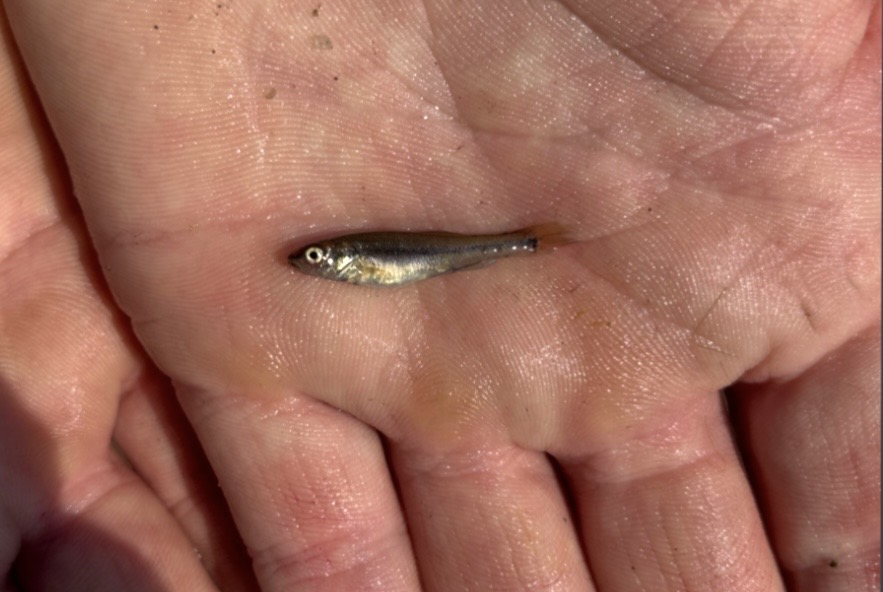
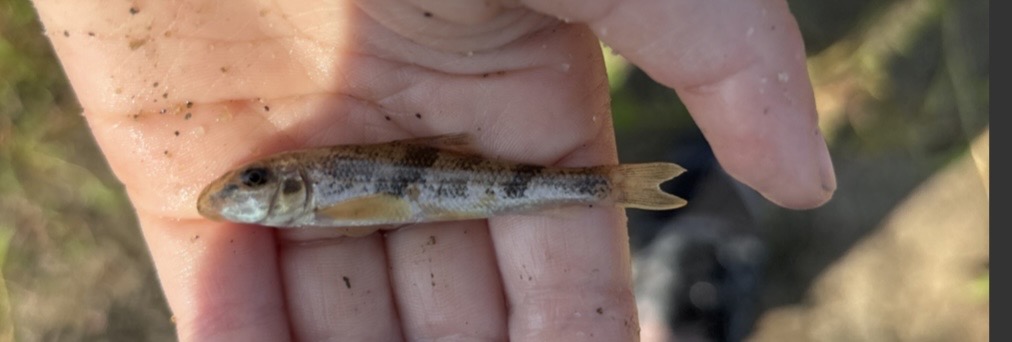
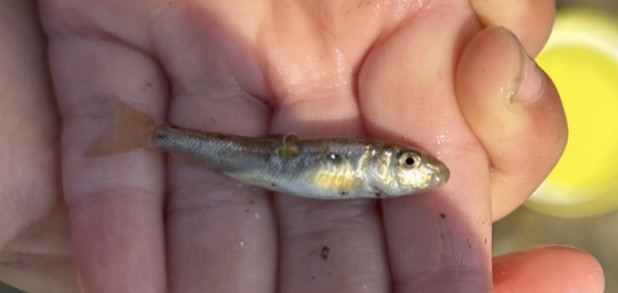
The first four species remain minnow-sized throughout their lives. The last three were juvenile fish that will eventually grow much larger. Adult Creek Chubs typically reach 4-8 inches in length, White Suckers commonly grow to 12-18 inches, and Northern Hogsuckers often reach 10-18 inches.
One thing I learned while researching these fish is that minnow-sized species generally live much shorter lives than larger fish. Shiners, dace, darters, and killifish often live only two to four years, whereas larger species such as suckers, sunfish, bass, and catfish commonly live eight to twenty years or more.
There are several reasons for this difference. First, small fish experience intense predation pressure. They are preyed upon by bass, pike, walleye, herons, turtles, and even larger fish. Second, their high metabolic rates cause them to burn energy quickly and generally age faster. Third, many small species follow a “live fast, reproduce fast” strategy, spawning multiple times each year and producing large numbers of offspring. Finally, the shallow creeks, riffles, and stream margins where many small fish live are often unstable environments that can be affected by floods, droughts, heat waves, and winter freezing.
Fortunately for these species, their short lifespans are offset by rapid reproduction, allowing populations to rebound quickly after environmental setbacks.
We had a very enjoyable afternoon catching fish and learning more about a fascinating group of species that most anglers rarely pay much attention to. Although none of these fish will count toward my 100-species goal, they reminded me that some of the most interesting discoveries in nature come in very small packages.
 OneHundredFish