I was reading the introduction to Ken Schultz’s excellent Field Guide to Freshwater Fish and was surprised to see the statement that there are approximately 21,000 fish species. That didn’t sound right. I thought I had recently read that the number exceeded 30,000.
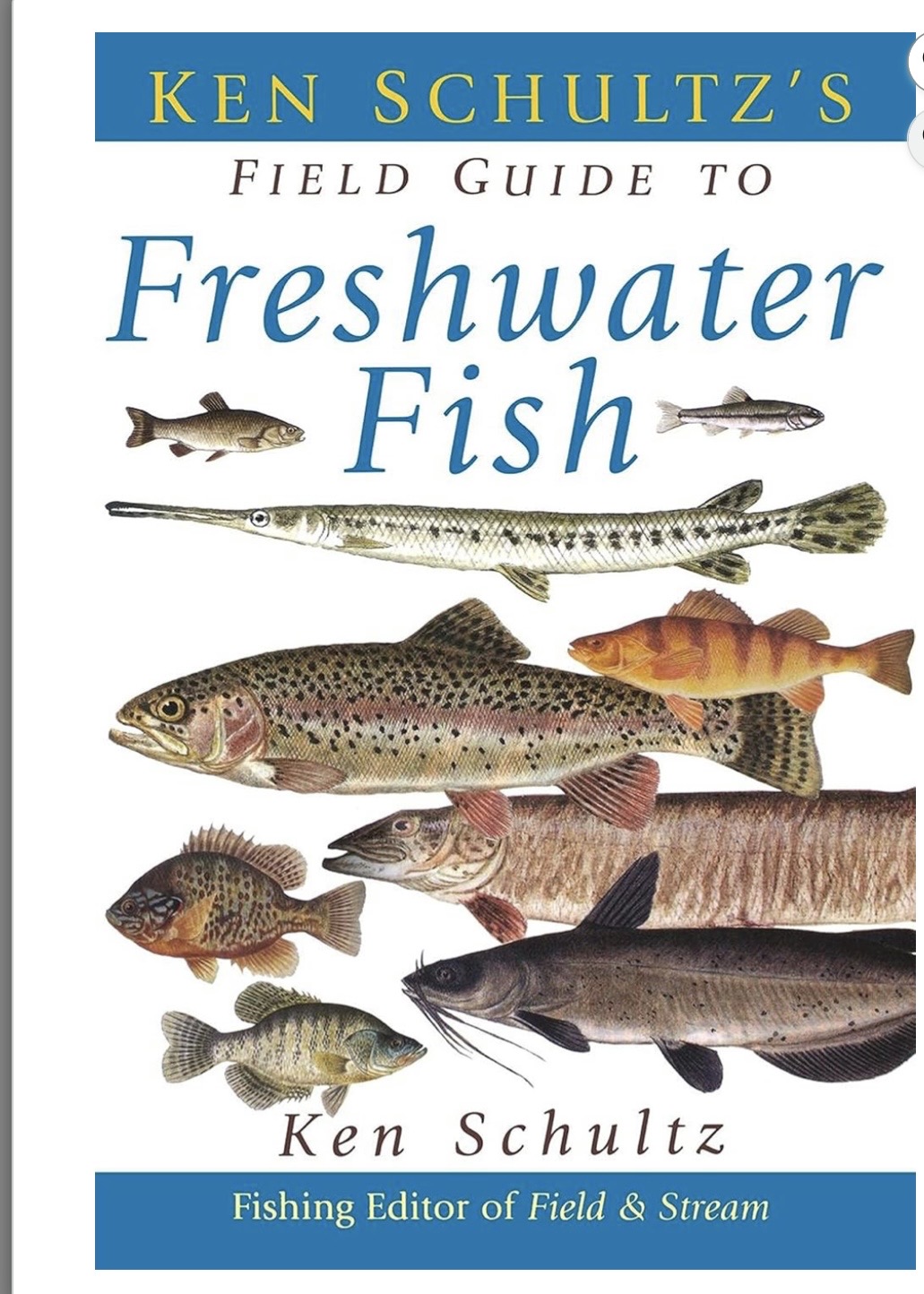
I checked the copyright date and discovered that Schultz’s book was published in 2004, more than two decades ago. A little research revealed that the number of known fish species has increased dramatically since then. Today, there are approximately 37,700 recognized living fish species, nearly 17,000 more than the estimate cited in 2004. Fish taxonomy is one of the fastest-growing areas of vertebrate biology.
The most authoritative databases currently report:
- 37,678 valid fish species in Eschmeyer’s Catalog of Fishes (July 2026)
- Approximately 36,700 species in FishBase (June 2026)
Why has the number increased so much since 2004?
Several factors have contributed to the jump from roughly 21,000 to nearly 38,000 species:
- A huge increase in taxonomic research, with hundreds of new species described annually. (For example, 409 new species were described in 2025 and another 217 by mid-2026.)
- Exploration of previously inaccessible habitats, including deep-sea environments, remote Amazon tributaries, and isolated Indonesian islands.
- Advances in genetic analysis, which have revealed that many “single” species actually consist of multiple distinct species.
- Improved global databases that have standardized names, resolved synonyms, and corrected misidentifications.
- Increased funding and research focused on highly diverse groups such as catfish, minnows, carps, loaches, and reef fishes.
What I find particularly remarkable is that although freshwater accounts for only about 0.01% of Earth’s water, it contains roughly 15,000 fish species, or about 40% of all fish diversity.
Why are freshwater habitats so species-rich?
Freshwater environments are naturally fragmented into rivers, lakes, springs, caves, and isolated drainage systems. These barriers separate populations and promote speciation over time. One of the most diverse freshwater groups, the Cypriniformes (carps, minnows, and loaches), alone contains roughly 4,500 species.
This raises another question: Why are fish so much more diverse than other vertebrate groups such as birds and mammals?
Several evolutionary and ecological factors contribute:
Time. Fish have been around for more than 500 million years, giving them far longer to diversify than mammals or birds.
Geographic isolation. Freshwater systems continually isolate populations, accelerating speciation.
Habitat diversity. Marine environments provide an extraordinary array of ecological niches, including coral reefs, open oceans, deep-sea trenches, kelp forests, estuaries, and polar seas.
Genomic innovation. Teleost fishes underwent an ancient whole-genome duplication event, creating extra genetic material that could evolve new functions.
Ecological breadth. Fish occupy an astonishing variety of habitats, including:
- caves
- coral reefs
- rivers
- lakes
- swamps
- open oceans
- deep-sea trenches
- polar waters
- desert springs
No other vertebrate group occupies such a diverse range of environments.
Morphological flexibility. Fish have evolved an extraordinary variety of adaptations, including:
- electric organs
- venom glands
- suction discs
- bioluminescent lures
- transparent bodies
- highly specialized jaws
- unusual reproductive systems
This evolutionary flexibility has helped drive diversification across hundreds of millions of years.
Even with approximately 37,700 described species, ichthyologists estimate that 10,000 to 20,000 fish species remain undiscovered, particularly in Amazon tributaries, the Congo Basin, Indonesian archipelagos, deep-sea habitats, and isolated karst spring systems.
If those estimates prove correct, the eventual number of recognized fish species could exceed 50,000, making fishes by far the most diverse group of vertebrates on Earth.

 OneHundredFish