Having recently caught a ton of Bullheads and, just yesterday, a Lake Sturgeon, Channel Catfish, and Flathead Catfish, I became curious about the role these structures play in the lives of these fish.
Barbels (pronounced bar-buhls, not bar-bells) are the whisker-like appendages seen on catfish, bullheads, and several other kinds of fish. These structures help fish locate food in bottom sediments, murky water, deep water, and nighttime conditions where vision is limited.
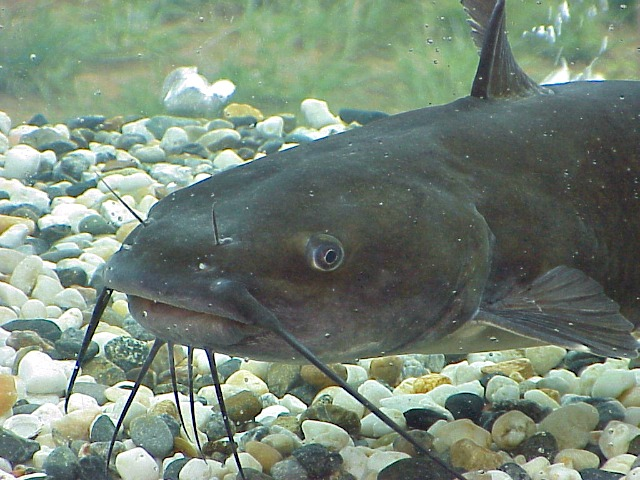
Among North American freshwater fishes, barbels are found in many catfishes (Order Siluriformes), including Channel, Flathead, Blue, and White Catfish; Black, Brown, and Yellow Bullheads; and the numerous Madtom species. Barbels are also present in all true Sturgeons (Family Acipenseridae), including Lake, Pallid, Shovelnose, Atlantic, Shortnose, White, and Green Sturgeon. Other freshwater fishes with barbels include Burbot (also known as Eelpout) and Carp species such as Common Carp and Grass Carp.
Catfish typically possess four pairs of barbels (eight total), although the number and arrangement vary among species. Sturgeon, by contrast, always have four barbels positioned beneath the snout just in front of the mouth. Common Carp have two pairs of barbels (four total) at the corners of the mouth, while Burbot have only a single barbel located beneath the chin.
Although barbels have evolved independently in many different fish groups, they generally serve the same purpose: acting as highly sensitive sensory organs that help fish locate food and explore their surroundings when vision alone is not enough. From an evolutionary perspective, barbels provide a nice example of convergent evolution—different fish lineages independently evolved similar sensory “whiskers” because they offer a significant advantage in dark, muddy, or bottom-dwelling environments.
As a pathologist, I was curious about what a histologic section of a barbel would look like—that is, how it would appear under the microscope after staining. It turns out that a fish barbel is much more than a simple flap of skin; it is a highly specialized sensory organ.
In cross-section, a catfish or carp barbel typically contains:
- Stratified squamous epithelium covering the outer surface, much like the epidermis of human skin.
- Numerous taste buds scattered throughout the epithelium. In catfish, these are extraordinarily abundant. The taste buds contain specialized sensory receptor cells that allow the fish to literally “taste” objects before taking them into the mouth.
- Mucous cells, which secrete a protective mucus layer and help facilitate chemical sensing.
- A rich nerve plexus immediately beneath the epithelium. Large sensory nerve bundles course through the barbel, with individual nerve fibers extending to taste buds and tactile receptors.
- A connective tissue core that provides structural support.
- Numerous blood vessels that nourish the tissue.
- Supporting cartilage in some species.
Viewed histologically, a barbel resembles an exquisitely engineered sensory probe packed with receptors for touch and taste. What appears externally to be a simple whisker is actually one of the most sophisticated sensory structures found in fishes.
Now, when I look at a bullhead, catfish, sturgeon, or carp, I no longer see funny little whiskers—I see a set of highly specialized sensory instruments that help these fish thrive in environments where sight alone is not enough.
 OneHundredFish