This afternoon I returned to Northfield to try again for the huge Carp I failed to land Monday evening in the Cannon River tailwaters below Ames Dam. Once again, things didn’t go as planned in terms of targeting Common Carp—but I still managed to add a new species to my list.
Given how underpowered my medium-light rod and small hooks felt earlier in the week, I switched to heavier gear: a heavy rod, 30 lb braid main line, a 2 oz flat weight (which holds well in the current), 6mm bead, barrel swivel, and a ~20-inch 17 lb monofilament leader. I began with a 2/0 Octopus hook, then downsized to size 1. I tied the braid to the swivel with a Palomar knot, the swivel to the leader with a Trilene knot, and the hook with another Trilene knot. It was my first time using both knots, and I found it satisfying to learn them.
I arrived around 4:30 pm and fished until sunset (about 9 pm). The afternoon was mostly sunny, with a few light sprinkles late that I actually enjoyed. Fishing makes you very aware of the weather—the changing light through the evening was especially nice.
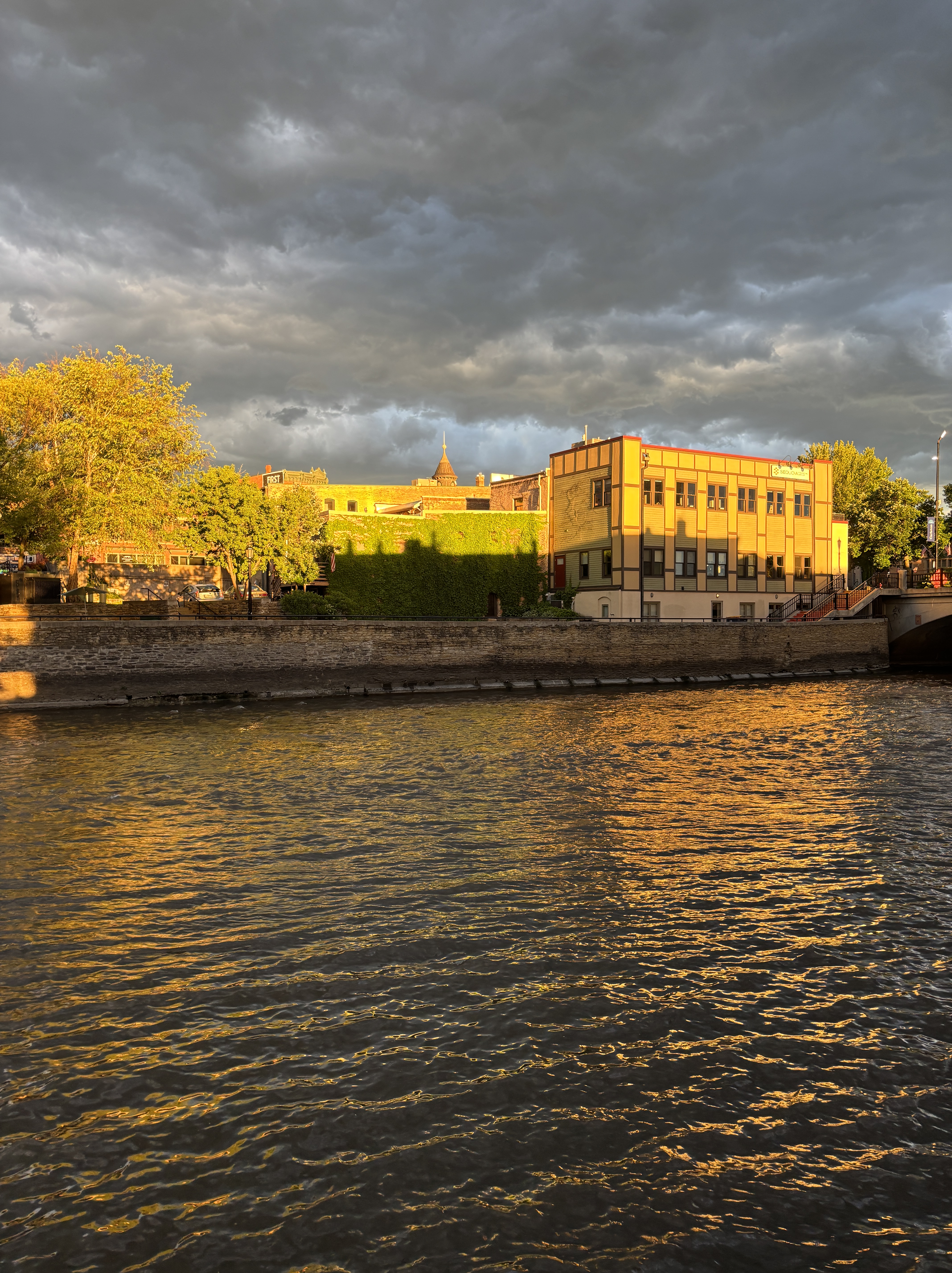
I didn’t catch a carp, but I did land two small Bullhead and a large, feisty Bluegill. The Bluegill fought hard; in contrast, with the heavy sinker and rod, I barely detected the Bullheads until reeling them in.
I couldn’t determine which Bullhead species they were, but I’ve since learned the key feature is the chin barbels: yellow bullhead have pale barbels, while brown and black have dark ones. Brown and black can be further distinguished by anal fin rays and coloration—brown are mottled with 21–24 rays, while black are darker and more uniform with 17–21. Tail shape and habitat provide additional clues. Next time I’ll pay closer attention.
[Update: the Bullhead was later confirmed as a Black Bullhead (Ameiurus melas) on iNaturalist]
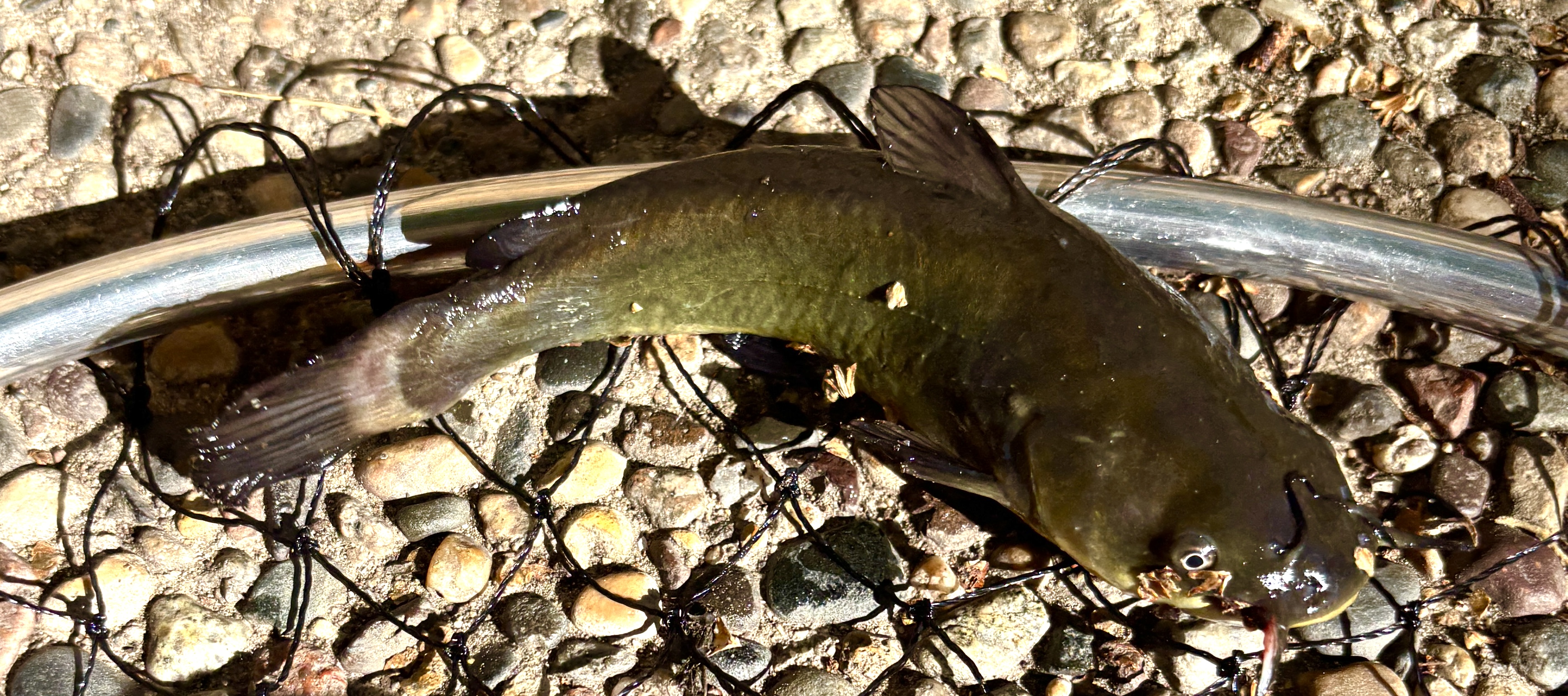
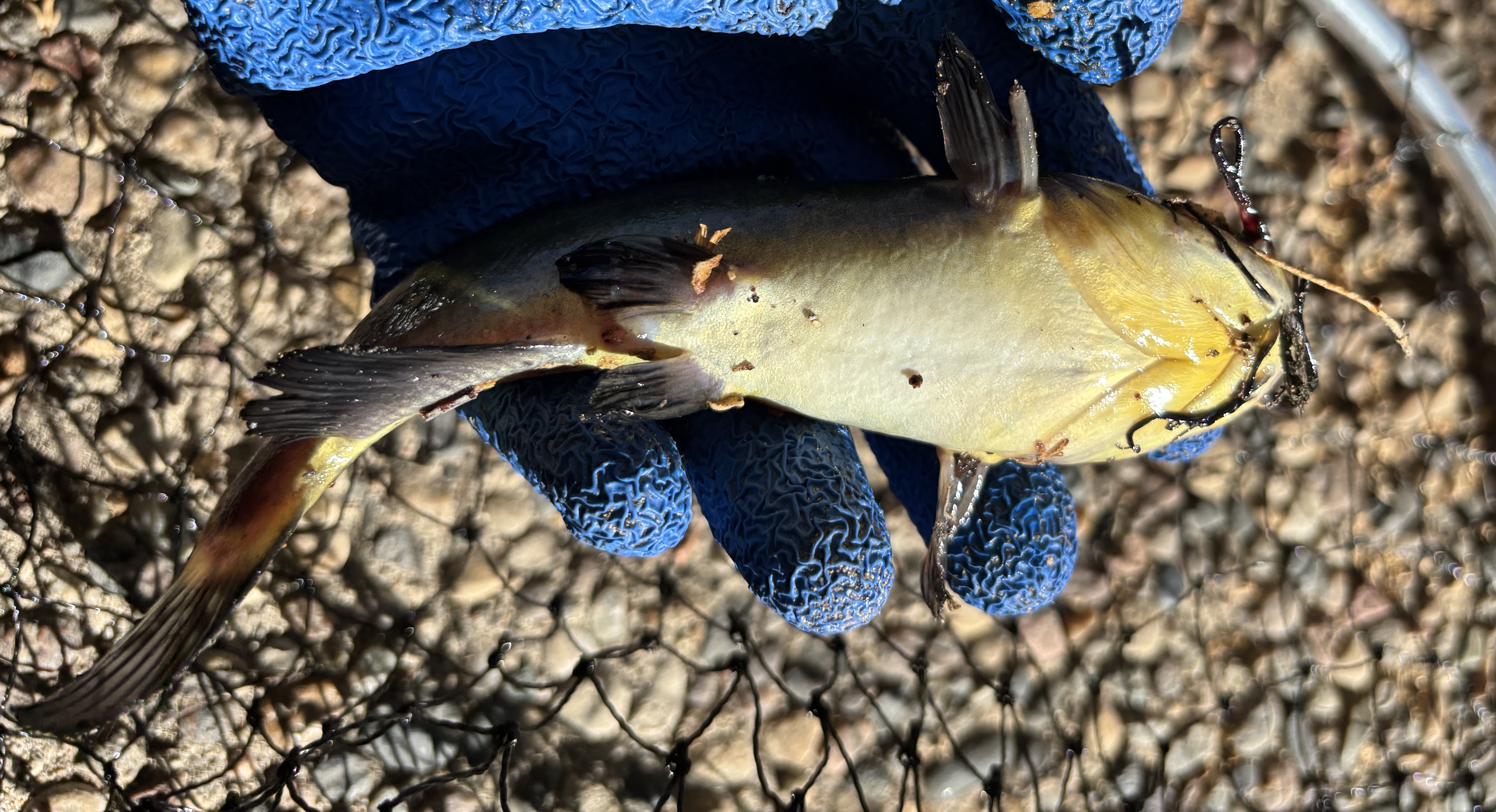
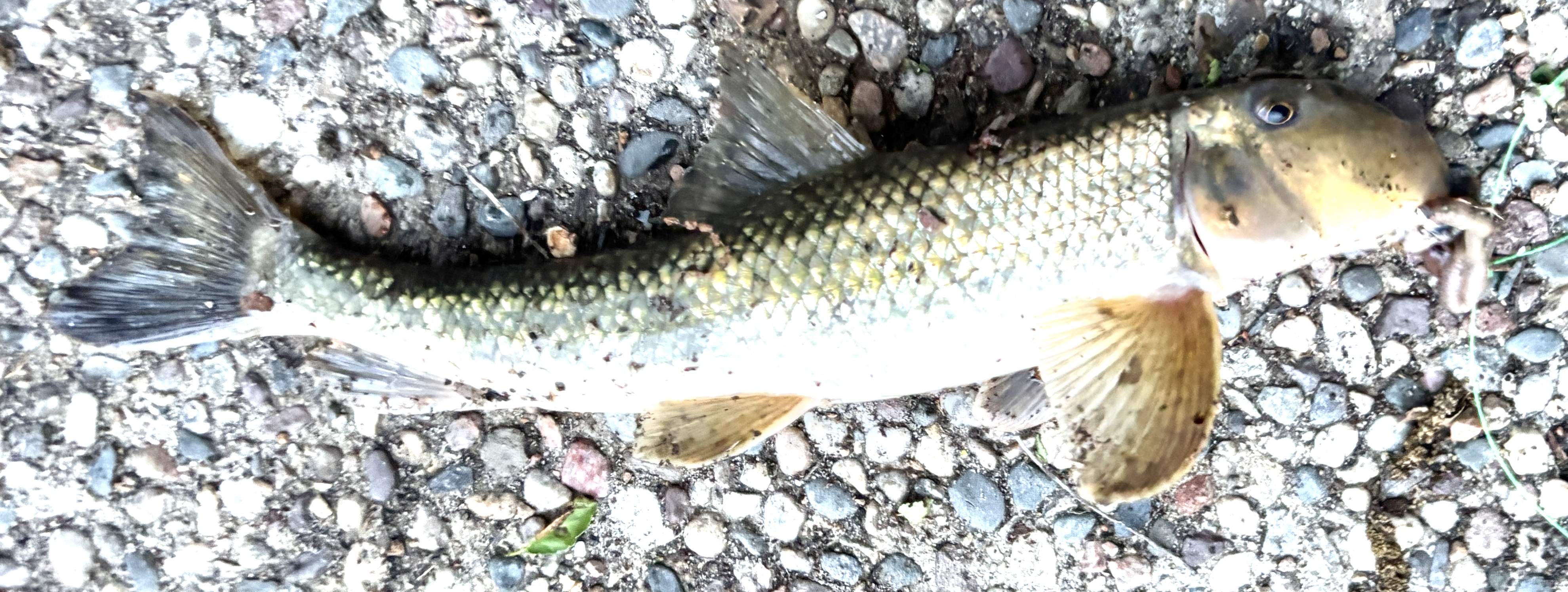
As sunset approached, I felt some disappointment—not having caught a carp or added a species (Update: apparently I had caught a new species, a Black Bullhead with iNaturalist update). But on my final cast I hooked a modest fish I hadn’t even realized was on the line. My initial impression was that it was a Redhorse species, which would have been a new species. However, iNaturalist (confirmed by two observers) identified it as a Northern Hog Sucker—still a new addition.
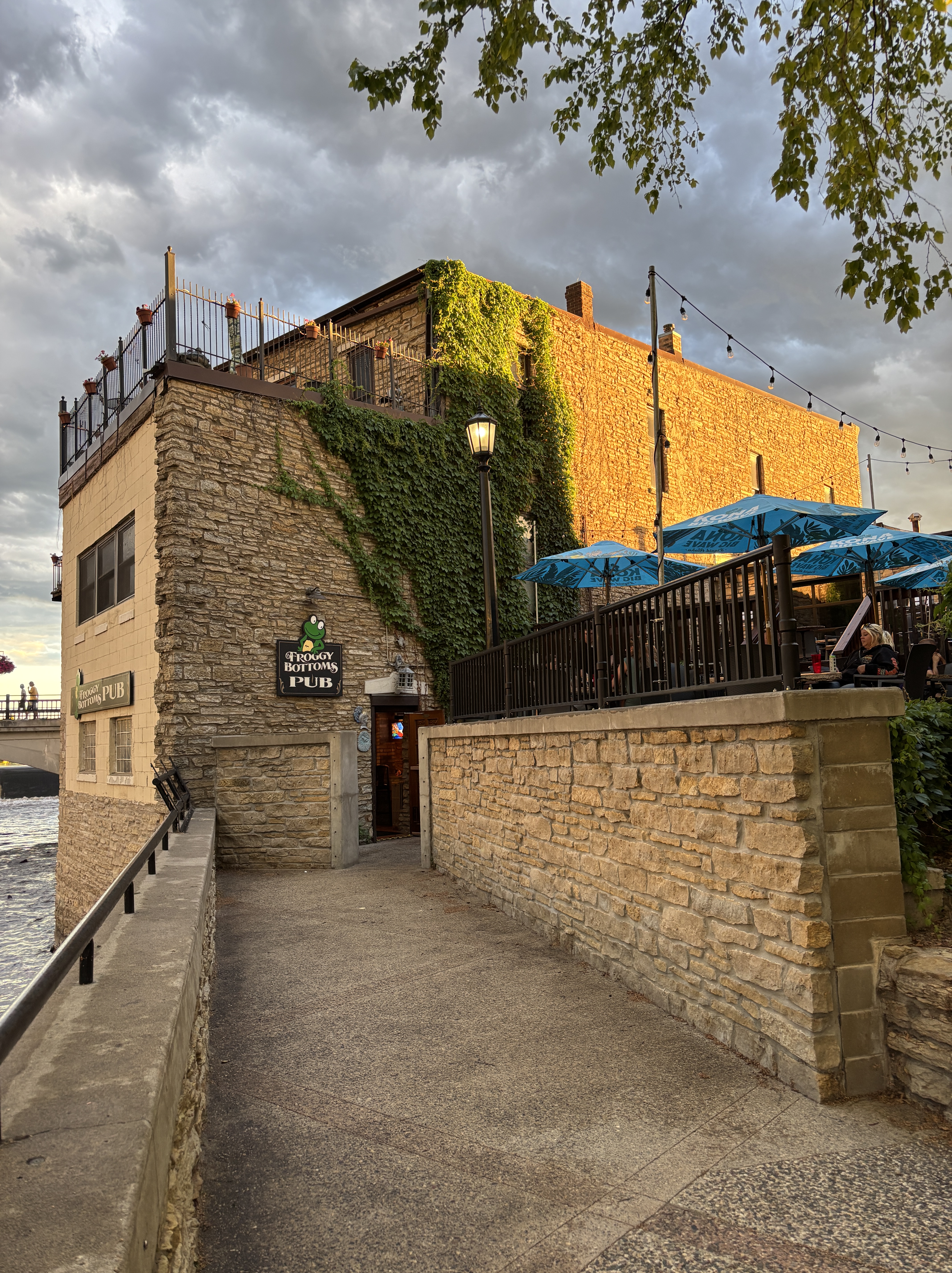
There’s a pub, Froggy Bottoms, right along the promenade by Ames Dam where I was fishing. People passed by on their way in, occasionally asking how things were going. One man was surprised I was targeting carp, given their reputation, but understood when I explained their size and fighting ability. I also admitted I was after them for my species list.
Northern Hog Suckers and Redhorse belong to the same family (Catostomidae). They aren’t especially attractive fish, but they play important ecological roles—moving nutrients, supporting food webs, and stabilizing benthic habitats. In many systems, they function as keystone species.
Carp, by contrast, belong to a different family. Although they look similar and share bottom-feeding habits, this reflects convergent evolution rather than close relation. Carp have barbels and more complex pharyngeal teeth and are omnivorous, whereas suckers lack barbels and tend to specialize on invertebrates.
In the end, it was a good outing. I added a new species—the Northern Hog Sucker—and deepened my understanding of both suckers and carp.
 OneHundredFish