History of the Clean Water Act—and Why It Matters to Fishermen

While fishing the other day, I found myself thinking about how river water quality compares to when I was a kid in the 1960s and 1970s. It seems much improved today, even though there is still room for progress.

The first Earth Day was held on April 22, 1970, when I was just 11 years old. I remember it being a big deal, but I had little understanding of what it was about—at the time or even until recently, when I read more about it. One of the most important outcomes, especially for those of us who fish, was the passage of the Clean Water Act.

The Clean Water Act grew out of decades of largely unsuccessful efforts to control water pollution in the United States. Earlier laws, such as the 1948 Federal Water Pollution Control Act, relied mostly on voluntary cooperation and had minimal enforcement power. By the 1960s, many rivers and lakes were heavily contaminated with industrial waste and sewage. Public concern reached a peak after events like the 1969 Cuyahoga River fire, when a polluted river literally caught fire.

In response to this environmental crisis and rising public pressure, Congress passed sweeping reforms in 1972 that became known as the Clean Water Act. Despite a veto by President Nixon, Congress overrode it with strong bipartisan support. The law marked a major shift: rather than relying on voluntary measures, it made it illegal to discharge pollutants into U.S. waters without a permit and established a national regulatory system to control pollution.

Over time, the Act has been strengthened and refined. Amendments in 1977 expanded controls on toxic pollutants and industrial discharges, while changes in 1987 placed greater emphasis on state-led programs and addressed pollution from runoff sources.

Today, the Clean Water Act remains the foundation of water pollution regulation in the United States. It reflects a fundamental transformation—from weak, fragmented efforts to a strong federal framework designed to protect the nation’s waters.

Importantly, the Act applies not only to the rivers and lakes where I fish, but also to coastal waters and estuaries—essentially the country’s interconnected surface waters.

For more information on the history of the Clean Water Act (as well as the EPA and the Clean Air Act), see this excellent video.
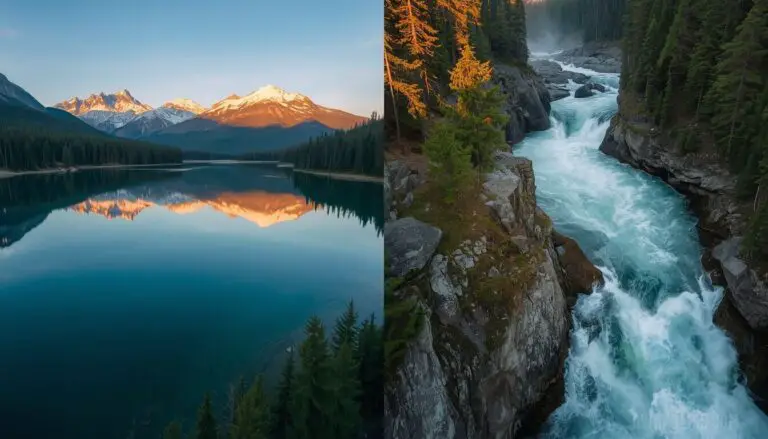
Which Has Greater Fish Species Diversity in the US, Rivers or Lakes?

The fact that I prefer fishing from shore has nudged me toward rivers—and that, in turn, led to an unexpected realization: rivers seem to hold an extraordinary diversity of fish. That observation made me wonder whether rivers actually harbor more species than lakes. It turns out they do—and it’s not even close.

So why is that? The short explanation is simple: rivers create more ecological niches per mile than lakes, and niches create species. This reflects a broader ecological principle. Ichthyologists have shown that lotic systems (flowing water) tend to support greater species richness at local scales than lentic systems (still water).

Again, why is that? Rivers generate a remarkable range of habitats—riffles, runs, pools, backwaters, floodplains, estuarine transitions, springs, tributaries, and headwaters. Each of these environments supports different species. In addition, rivers contain fine-scale microhabitats (eddies, seams, root wads, undercut banks) that further expand ecological opportunities. Lakes simply lack this degree of structural complexity.

Rivers also function as connected networks spanning large geographic areas. This allows for dispersal, isolation, recolonization, and ultimately speciation and helps explain why entire groups—darters, shiners, redhorse, and suckers—are predominantly riverine and have diversified into dozens (or hundreds) of species. Lakes, in contrast, are more like isolated bowls: excellent for stability, but less conducive to generating new species.

This pattern is especially evident in the southeastern United States. River systems such as the Tennessee, Cumberland, Mobile, and Apalachicola basins contain the highest freshwater fish diversity in North America—and among the highest in the world outside the Amazon. These are river systems, not lake systems.

So how large is the difference? Of the roughly 800+ freshwater fish species in the United States, the vast majority are associated with rivers and streams. Many are endemic to single watersheds. True lake-specialist species are relatively rare (for example, some ciscoes and pupfish), numbering only a few dozen. By contrast, river-dominated groups are extraordinarily diverse: redhorse (15+ species), darters (200+), minnows (300+), suckers (70+), and madtoms (30+).

None of this diminishes the importance of lakes—they excel in other ways. Lakes support high biomass, offer stable environments, and sustain large, iconic predators such as walleye, pike, and lake trout. They are also central to recreational fisheries. But they are not the primary engines of speciation.

If your goal is species diversity, rivers and streams are the heart of freshwater biodiversity in the United States. Lakes are wonderful—but rivers are where evolution does some of its most creative work.