Species #9: Green Sunfish

Fished at Chickamauga Dam in Chattanooga, Tennessee from about 9:00 a.m. to noon. Didn’t catch a lot but I did catch one new species—a Green Sunfish—with a bobber and small red worm.
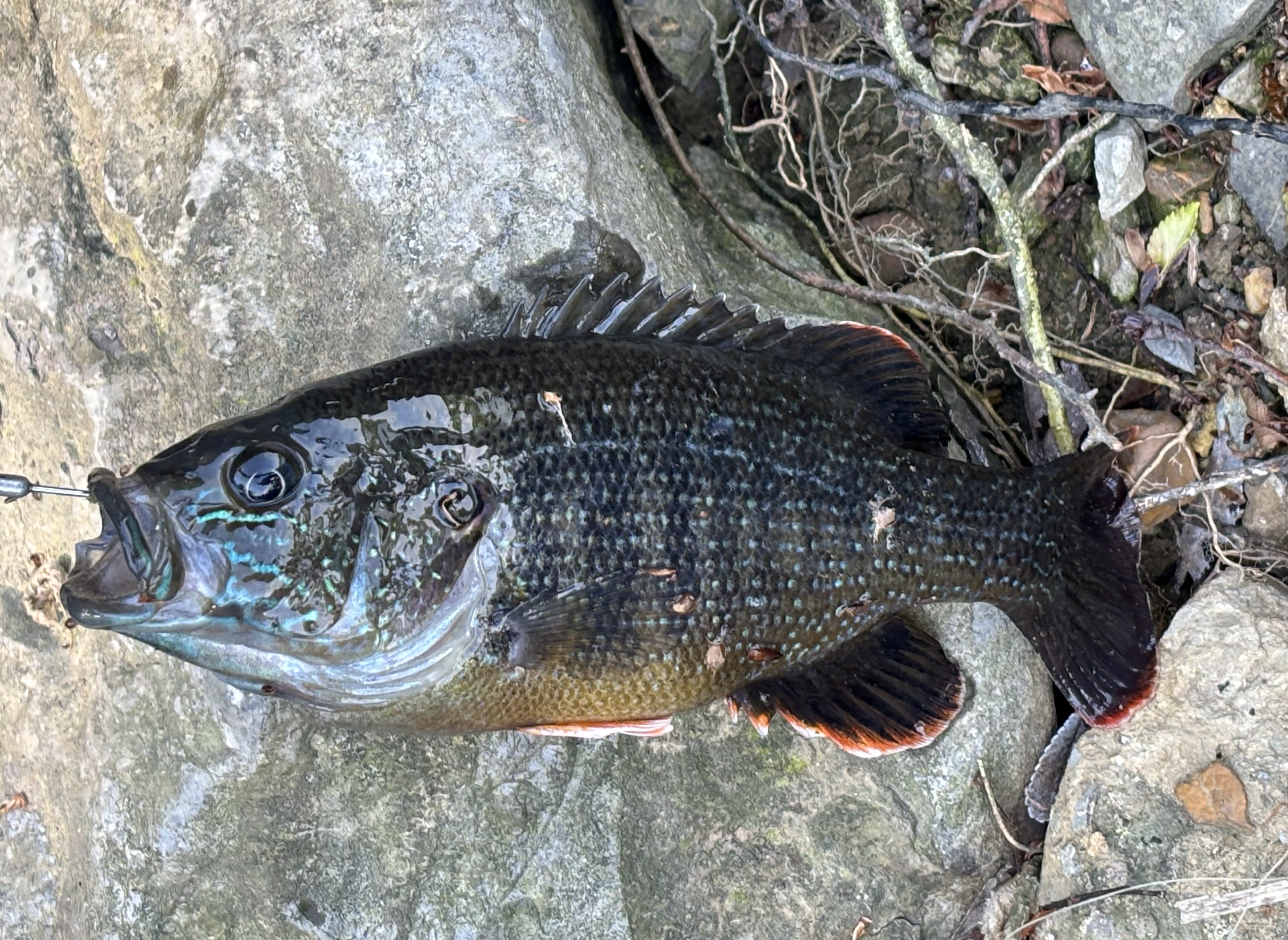
Green Sunfish

What a beautiful little fish. Particularly like the torquoise stripes on the face and orange-red tinged ventral and anal fins. It was probably no more than 6 inches long but I was excited to catch it since it was a new species for me. Other than that, I mostly caught Bluegill. I was hoping for Largemouth Bass but didn’t connect with any.

In the afternoon I moved to Booker T. Washington State Park, also in Chattanooga, hoping to add more sunfish species or maybe a bass. I caught several small Bluegill from a pier, but nothing new. I then moved closer to the open part of the lake and fished bobber-and-worm with no luck.

I switched to a Rapala rattling lure with treble hooks and started catching good-sized bluegill. Unfortunately, on the last fish, things went wrong. As I tried to unhook it, the fish thrashed and managed to drive the hook into my left pinky. I couldn’t get the hook out, and every movement was painful. I eventually freed and released the fish—probably the nicest thing I did all day for a creature that had just injured me. I imagine the fish might have thought, Now you know how it feels.

I was left with the lure stuck in my finger and wandered the parking lot asking people if they had wire cutters. The first person didn’t. Then I found a group—one man and two women—and asked again. The man had cutters but became squeamish when he saw the hook. One of the women, probably his wife, stepped up and cut the hook and lure away from my finger. Unfortunately, part of the hook remained embedded. She tried to remove the remainder with pliers, but it was too painful, and I asked her to stop. I thanked them all and decided it was time for the emergency room.

Google Maps directed me to Parkridge North ER, about 6.4 miles away. After a roughly 30-minute wait, they numbed my finger with lidocaine, rinsed with Hibiclens and removed the remaining hook without much trouble. They prescribed Augmentin as an antibiotic (which later gave me quite a bit of GI distress) and sent me on my way. I picked up the antibiotic at a Walgreens across from my hotel—the Drury Plaza—and called it a day.

The next two days would be fishing-free, but I hoped to resume on Monday, April 27, in and around the Atlanta area, where I’d be staying through Thursday morning before heading home to Rochester, Minnesota.
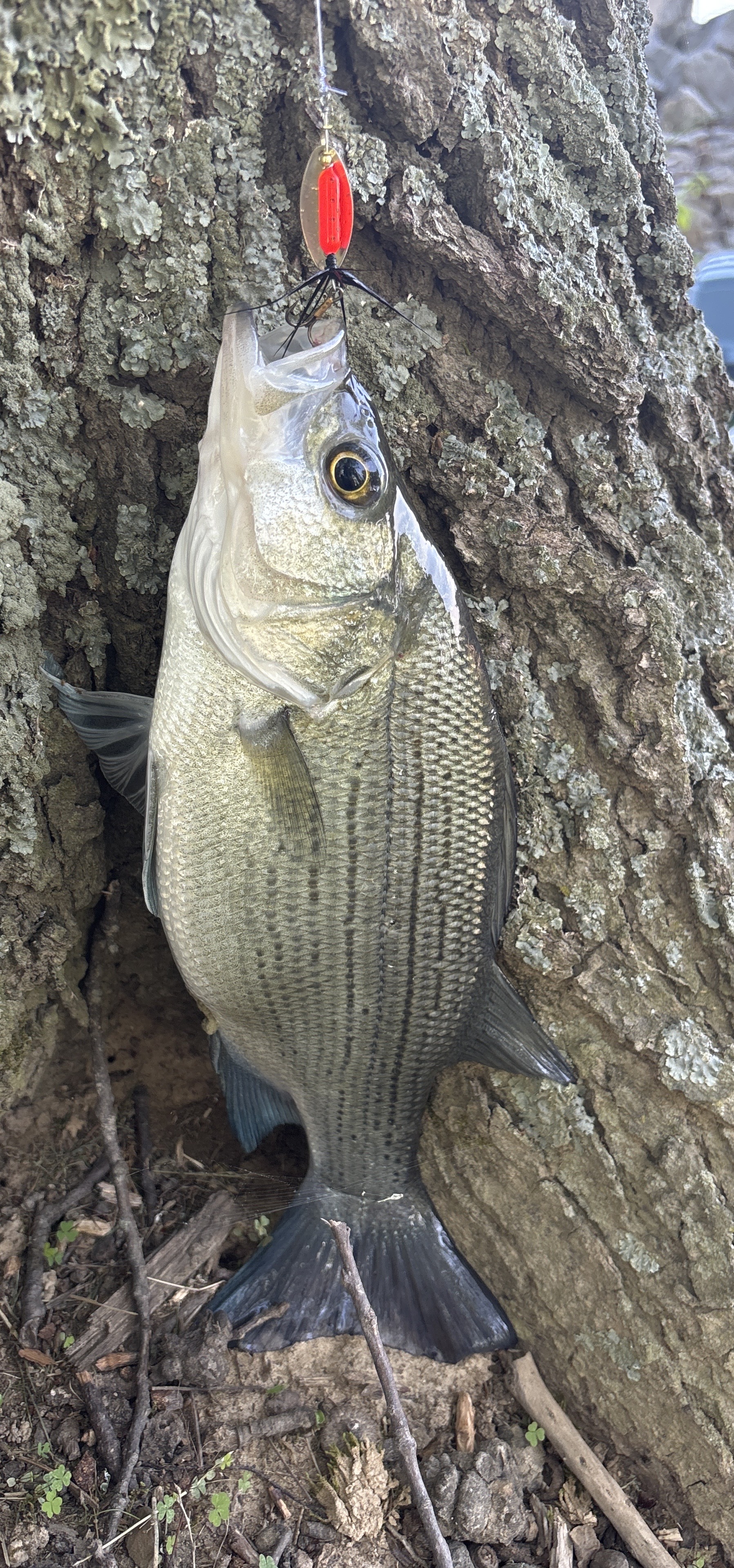
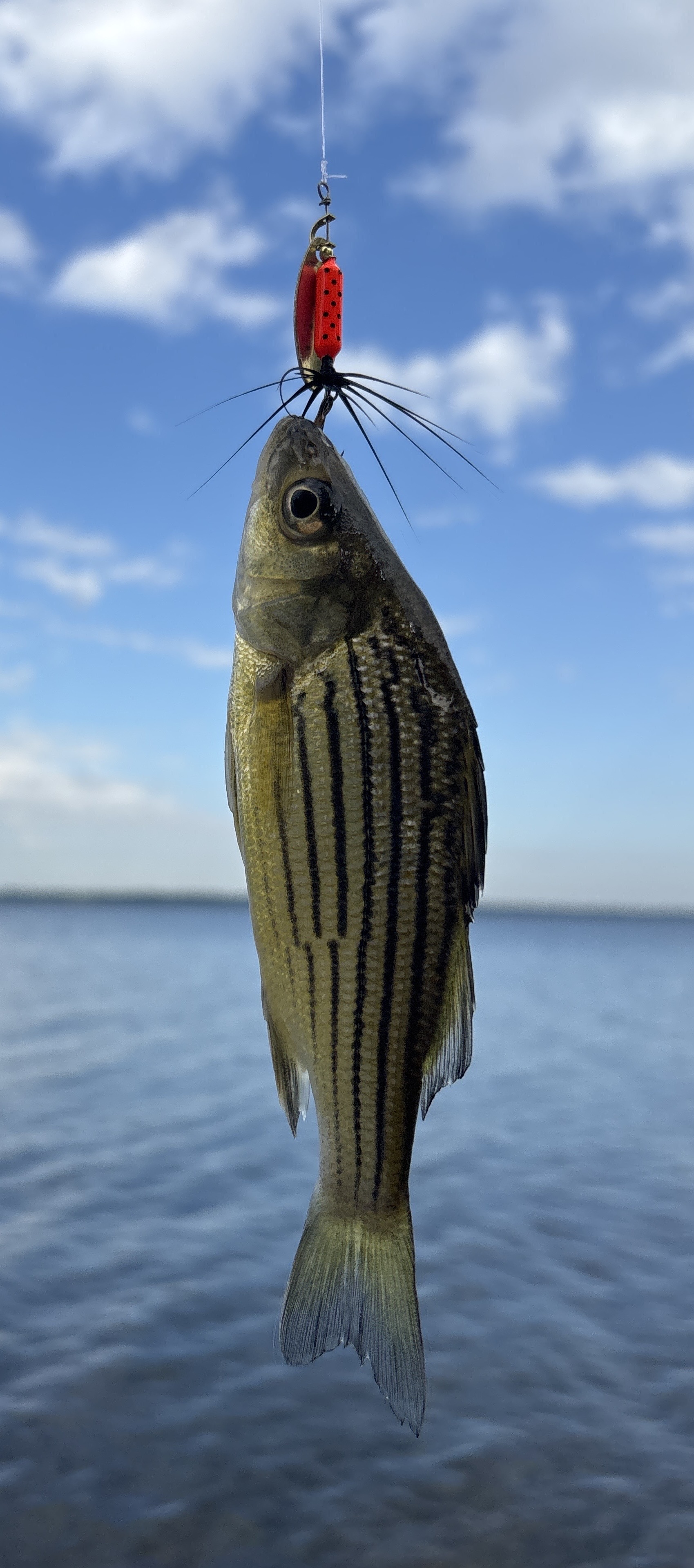
FISH #4–8: White Bass, Yellow Bass, White Crappie, American Gizzard Shad, Channel Catfish

Unlike the previous day, this turned out to be an excellent fishing day.

I drove to Rend Lake, about 30 minutes south of my hotel in Mt. Vernon, Illinois stopping at a bait shop along the way for red worms, nightcrawlers, leeches, and some local advice. The shop owner—a friendly, heavily tattooed man—shared a bit of his life story and mentioned he was worn down and ready for retirement. I enjoyed the conversation, but after a few minutes I headed on, eager to fish.

Following a Copilot recommendation, I started at North Marcum Beach on the east side of the lake. I walked down the riprap to the shoreline and began fishing with a small Mepps spinner. The bite was immediate—I was getting action almost every five casts.

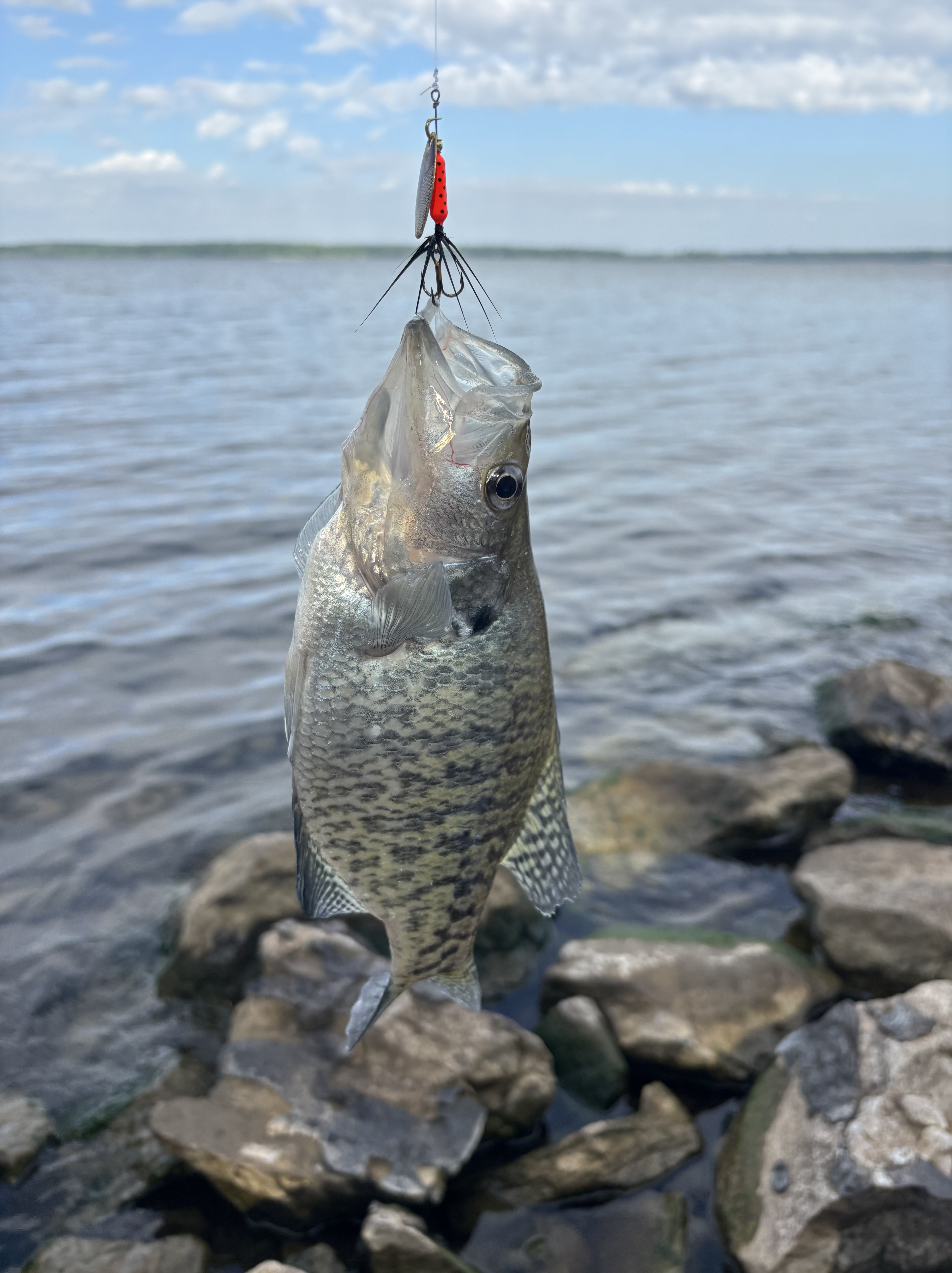
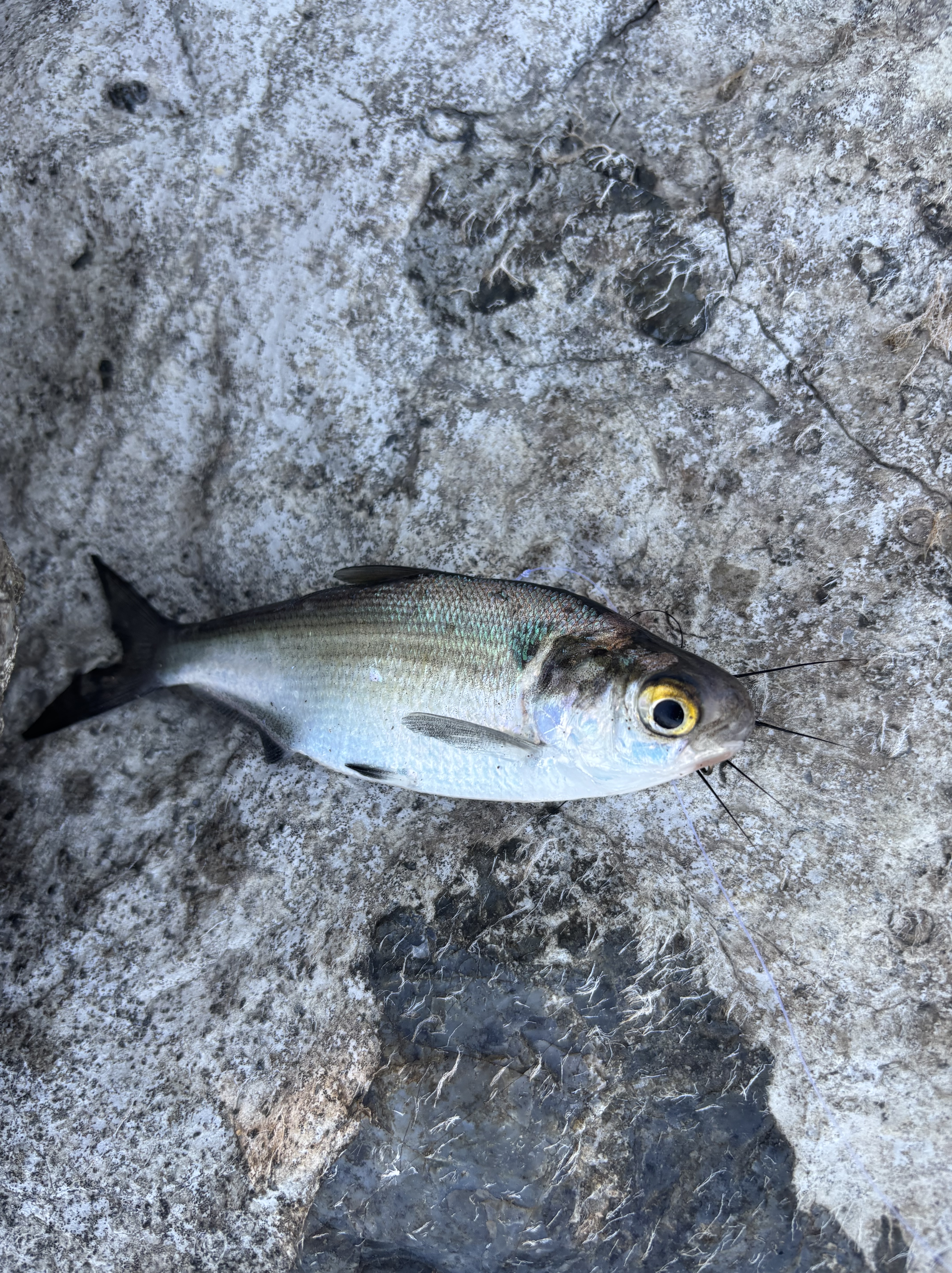
My first fish was a good-sized White Bass, followed by several Yellow Bass, White Crappie, a few Bluegill, and one small American Gizzard Shad identified later on iNaturalist. Every fish was caught on the same Mepps spinner.

White Bass
Yellow Bass
White Crappie
American Gizzard Shad

After a while, two men approached and apologized before explaining that the area was technically closed to the public. They had opened the gate for their own activity and forgotten to close it, emphasizing that it wasn’t my fault. It explained the nearly empty parking lot, and I was simply glad I’d fished there while the bite was hot.

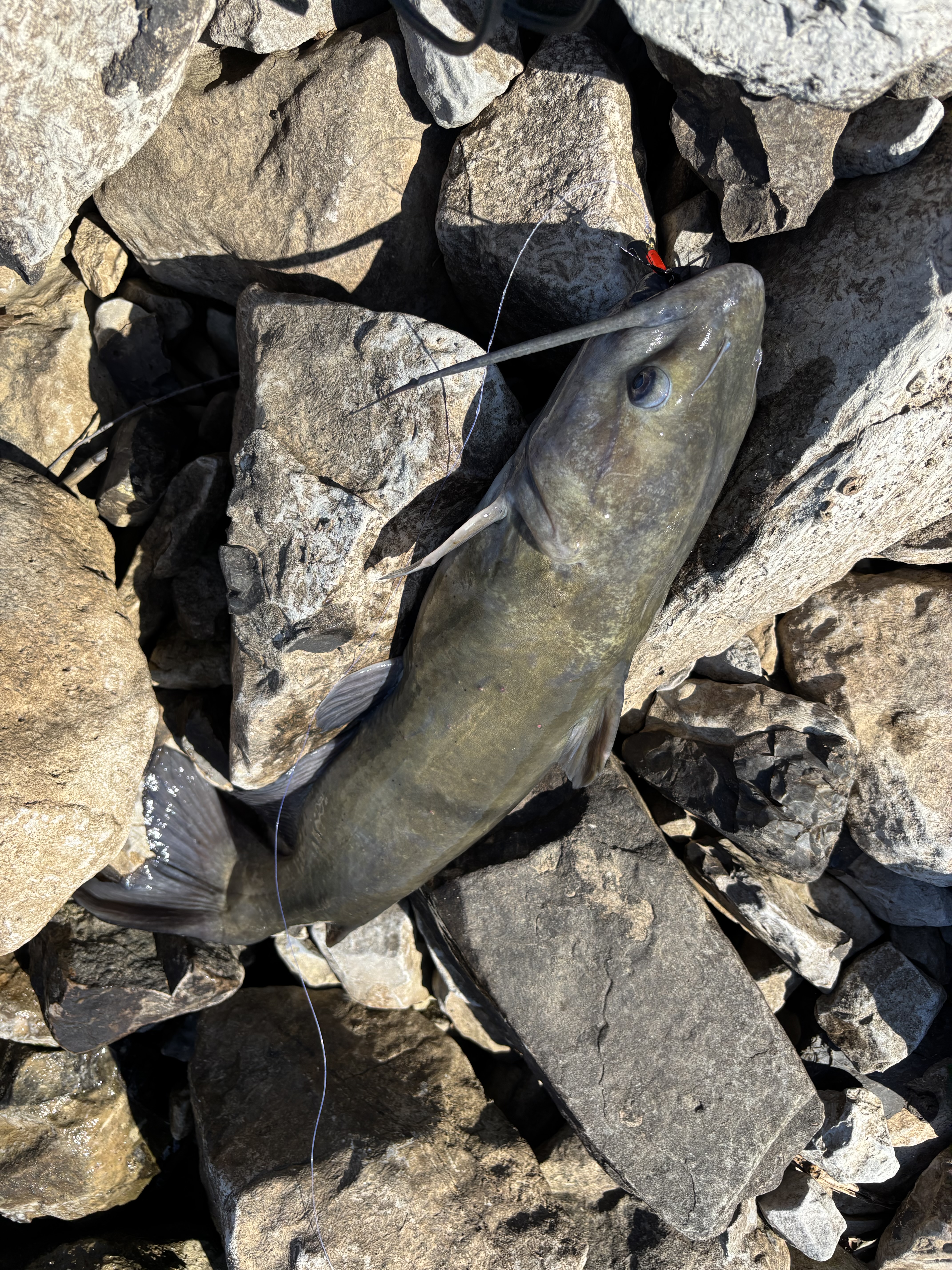
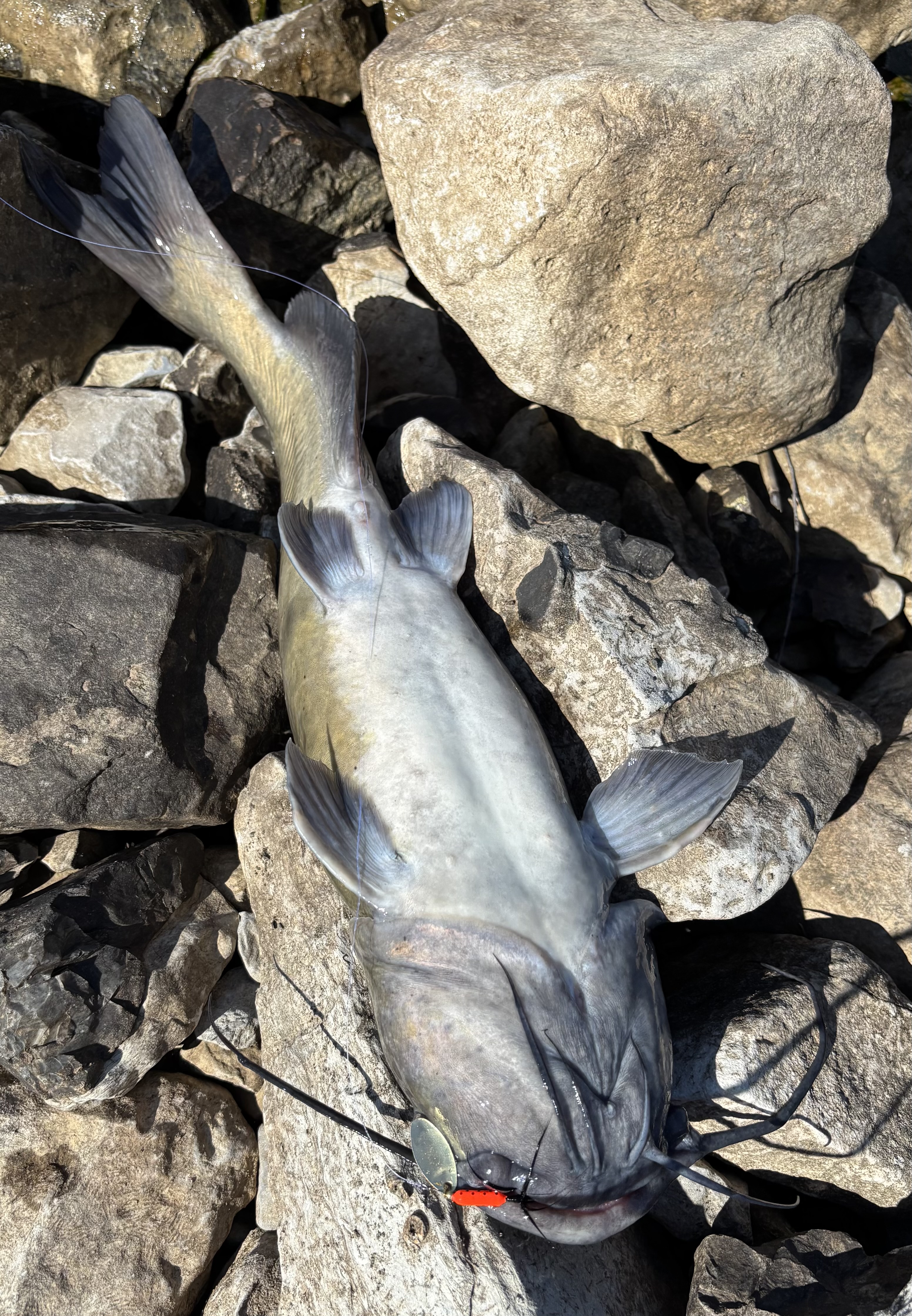
I then moved to Wayne Fitzgerrell State Recreation Area on the north side of the lake to try for catfish. Using a Santee rig for the first time—rigged with a sliding weight—I hooked two Channel Catfish. The larger was likely at least 20 inches long (about 4.5 lbs by estimate), making it one of the biggest fish I’ve ever caught; the smaller was probably around 3.5 lbs. I also landed a White Crappie and another Bluegill.

Channel Catfish
Channel Catfish

With the heat rising and a long drive ahead to Chattanooga, Tennessee, I packed up after about an hour. Rend Lake turned out to be a great stop: roughly 13 fish across seven species, with all but the Bluegill adding new entries to my 100‑species list.

Species #3: Smallmouth Bass


Left the Iowa City hotel around 8:00 a.m. and arrived at Wakonda State Park in northeast Missouri at about 9:30am. I spoke with a park ranger, who suggested a spot to try, though he warned that fishing there hadn’t been very good in recent years. He thought the park might have been overfished during the COVID period when visitation increased dramatically.

I fished for several hours and caught nothing but a sunburn—no bites at all. Eventually I gave up and started driving toward my next stop in Mt. Vernon, Illinois. Not wanting to be completely shut out for the day, I kept my eyes open for any promising water along the way.

I noticed I’d be crossing the Salt River (still in northeastern Missouri) and saw that there was public fishing access called Indian Camp just a couple of miles east of the road. The river was moderately fast-flowing and brownish, but not opaque. I wasn’t sure fish would even be able to see my lure, but I decided to try a Mepps spinner anyway.

I fished from the boat ramp and nearly slipped on the muddy surface, though I managed to keep my footing—at the cost of getting my freshly washed sneakers filthy again. The current pulled my lure downstream quickly, and I worried it wasn’t sinking enough to be effective. Still, I kept casting.

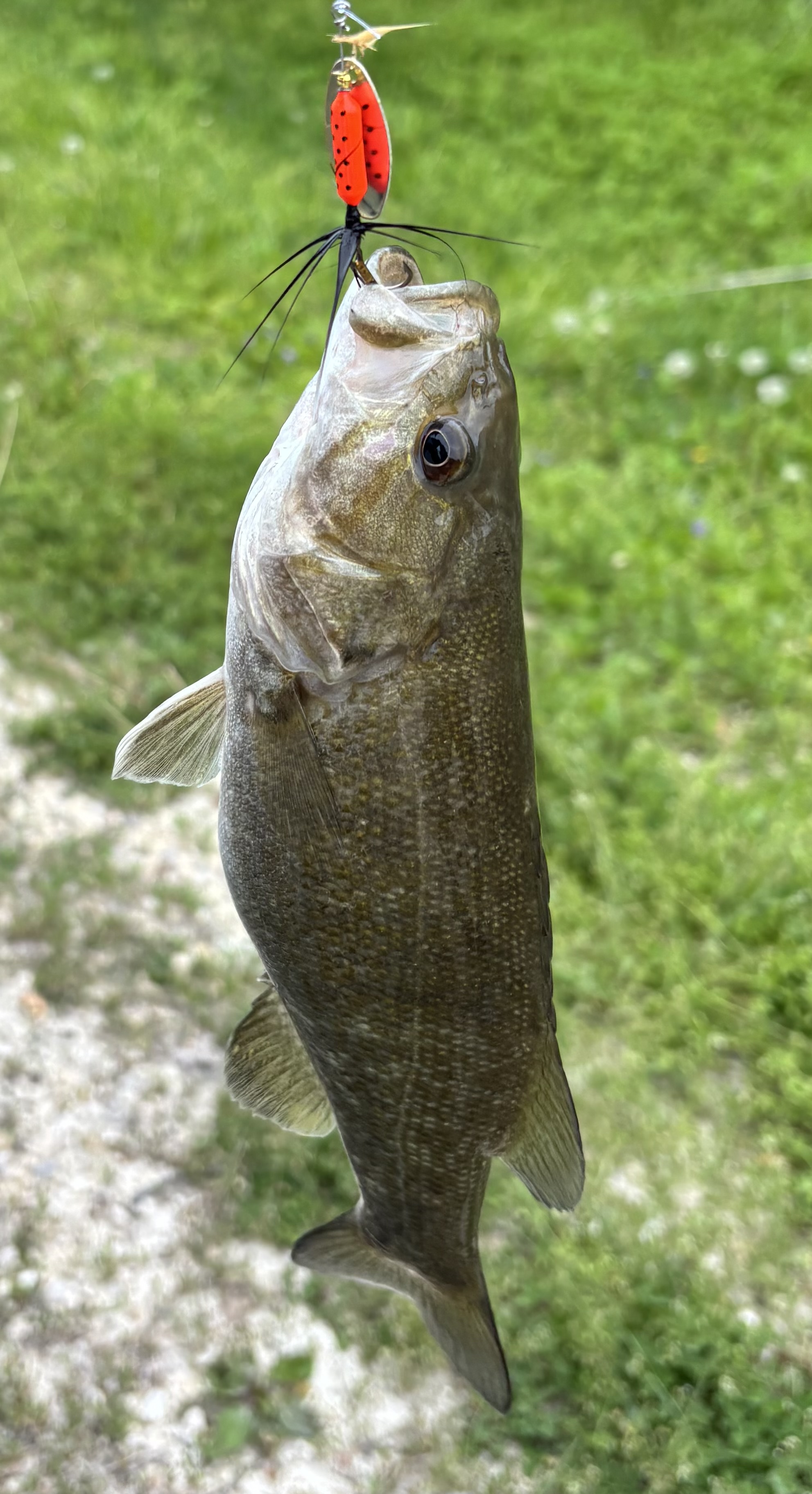
After about twenty casts, I finally got a solid bite. The fish fought fairly hard and turned out to be a Smallmouth Bass, probably in the 1–2 lb range.

Smallmouth Bass

While I was fishing, another man arrived hoping to fish for catfish. He seemed concerned that our lines would interfere with each other, so he held off. I told him I needed to get back on the road and that he could have the spot. I still had about three hours to drive to my destination—a Holiday Inn Express in Mt. Vernon—so that ended the fishing for the day. But at least I’d landed one fish to officially start the trip.

Species #1 and 2: Bluegill and Black Crappie

My goal is to catch 100 different fish species. This post marks the beginning of that journey.

I decided to start close to home, at the most familiar body of water I know: Willow Creek Reservoir here in Rochester, Minnesota. Although I haven’t fished much for quite a while, I have fond memories of bringing my daughter and son here when they were about 10 and 8 years old. On those trips we caught tons of panfish, and it seemed like the perfect place to begin.

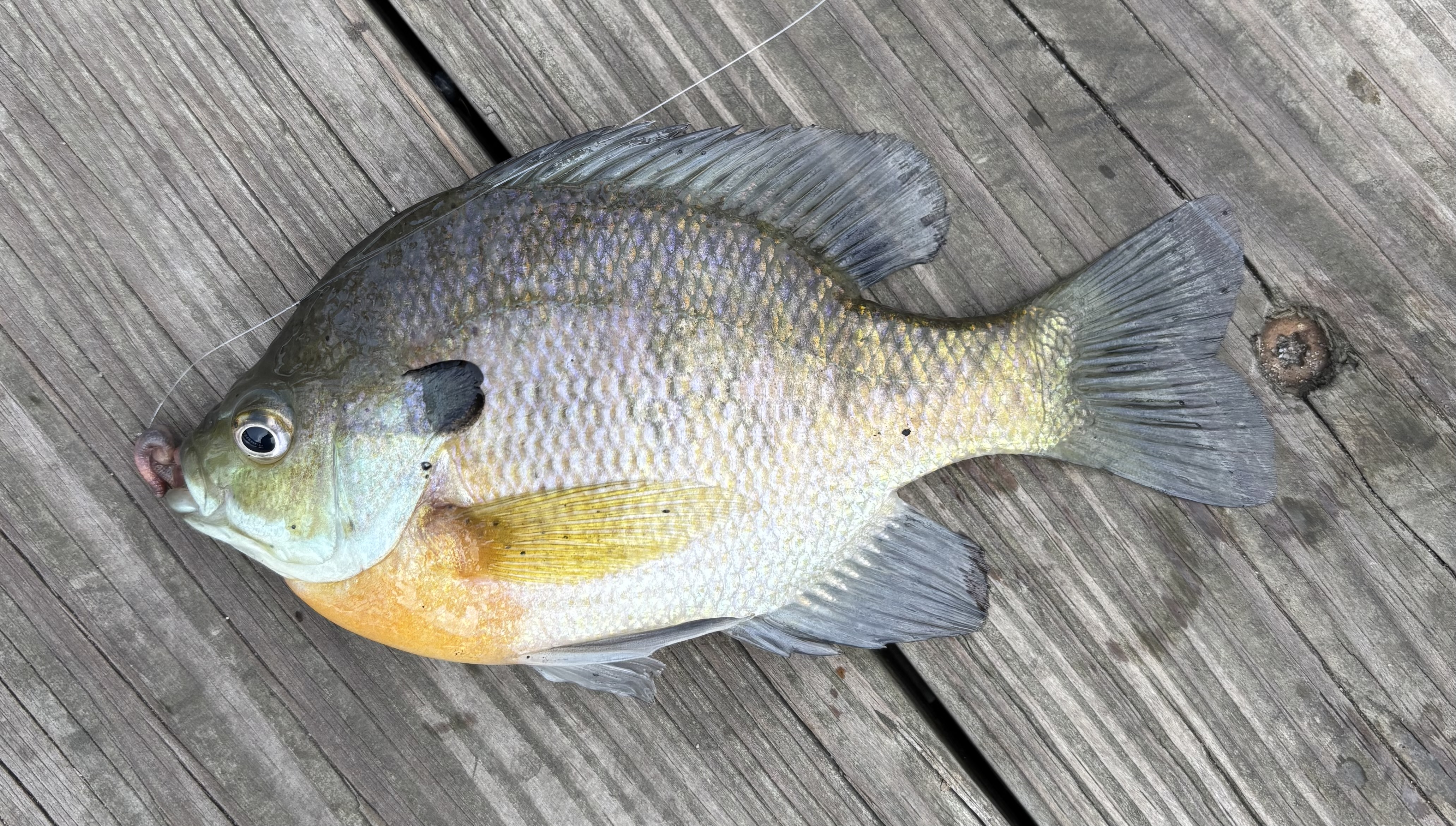
It was a pleasant spring day—ideal weather to kick off this adventure. My fishing knowledge is pretty superficial, so I kept things simple, fishing with a bobber and worm, along with a spinner lure. My very first fish, caught on a small red worm, was a Bluegill sunfish—an encouraging start.

Bluegill

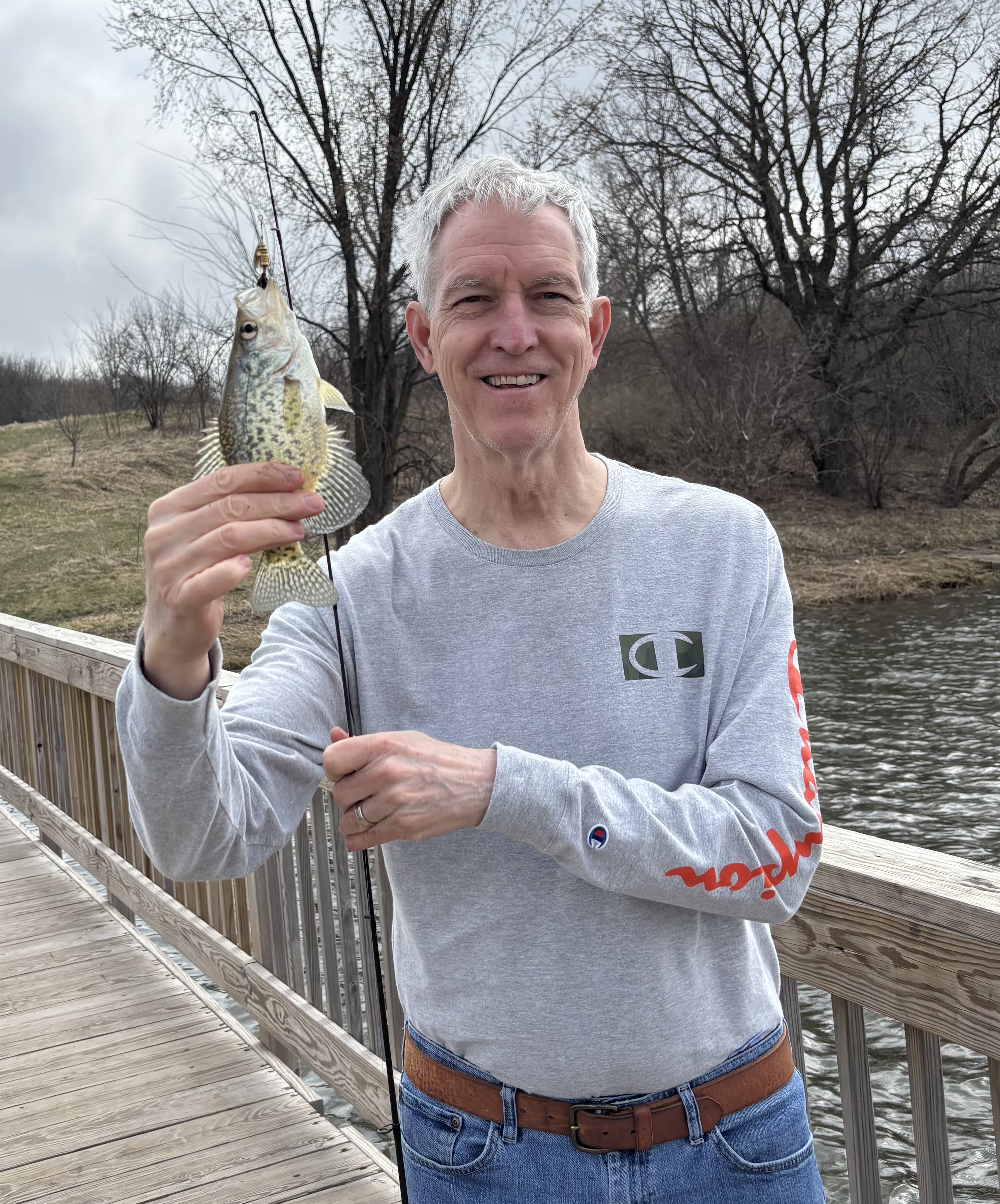
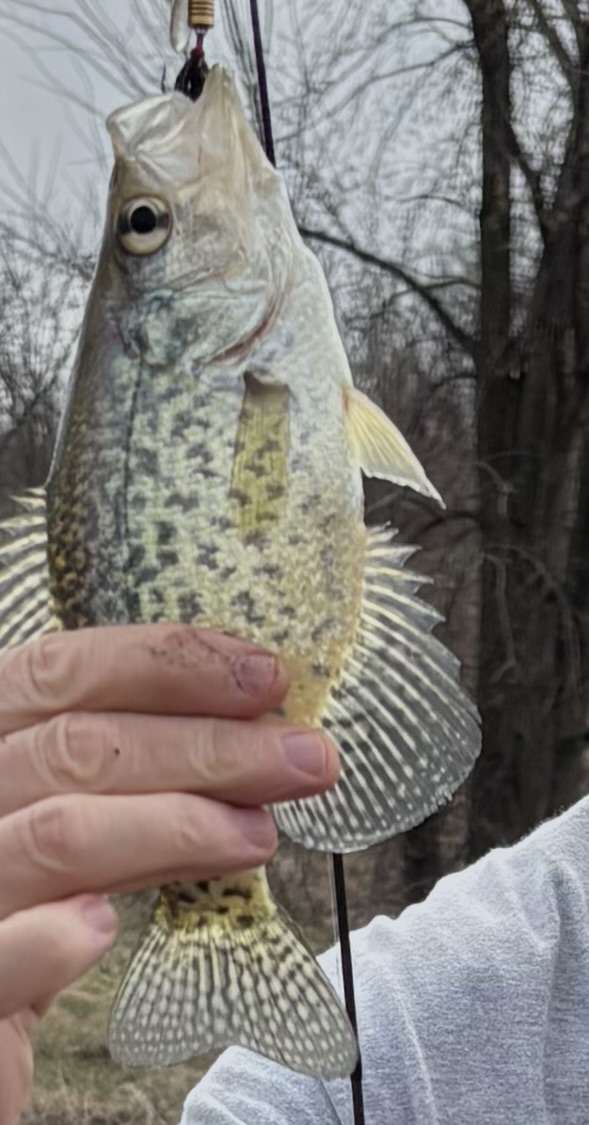
After that, the bites slowed down. A more experienced fisherman suggested switching to a lure if I wanted to catch crappie. I took his advice, and it paid off. Before long, I had caught several Black Crappie, officially launching my quest for 100 species.

Black Crappie and Me
Black Crappie